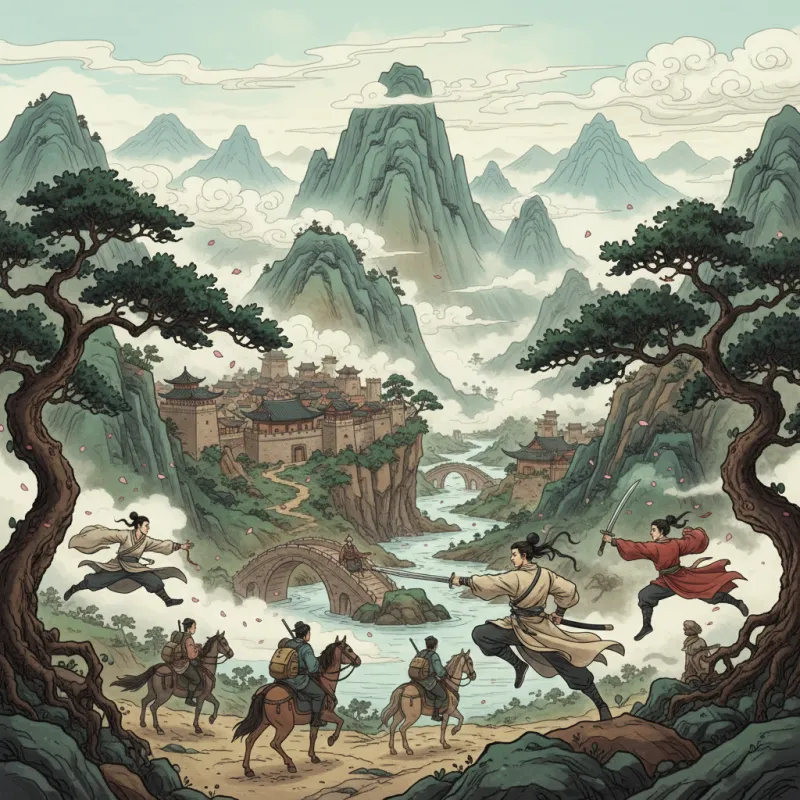
The first time you watch a wuxia drama, you'll probably be confused. Characters will fly through bamboo forests, speak in cryptic martial arts terminology, and reference sect hierarchies you don't understand. By episode ten, you'll be arguing with friends about whether 轻功 (qīnggōng, lightness skill) violates the laws of physics. By the finale, you'll be searching for your next series at 2 AM. This is the wuxia pipeline, and it's claimed millions of international viewers in the past decade alone.
The Streaming Landscape: Where Your Journey Begins
The golden age of wuxia accessibility started around 2016, when platforms realized international audiences would binge 50-episode Chinese dramas just as readily as they'd watch Western shows. Today, you have options that would've seemed impossible even five years ago.
Viki remains the gold standard for subtitle quality. Their community-driven translation system means you get cultural notes explaining why a character just committed a massive breach of 江湖 (jiānghú, martial arts world) etiquette. The library skews toward recent productions — expect everything from 2015 onward, with spotty coverage of classics. Best for: viewers who want context, not just translation.
iQiyi International has the deepest catalog, including many series that never made it to other platforms. Subtitle quality varies wildly — some shows have professional translations, others feel machine-generated. The interface can be clunky, but if you're hunting for a specific adaptation of a Jin Yong novel from 2003, this is where you'll find it. Best for: completists and fans of specific source material.
Netflix cherry-picks prestige productions and recent hits. You'll find The Untamed (2019) and Word of Honor (2021) here, but don't expect comprehensive coverage. Subtitles are professional but sometimes overly localized — they might translate 师父 (shīfu, master) as "sensei" to appeal to anime fans, which feels wrong. Best for: casual viewers who want the most popular series without commitment.
YouTube is the wild west. Official channels like Tencent Video and iQiyi post full series with subtitles, but availability changes constantly due to licensing. The comment sections, however, are gold — international fans debating plot points in broken English and Chinese create a genuine sense of community. Best for: broke students and people who enjoy chaos.
The Essential Five: Your Starter Pack
If you watch nothing else, watch these. They represent different eras, styles, and source materials, but all share one quality: they convert skeptics into believers.
The Legend of the Condor Heroes (2017) — Start here if you want classical wuxia in its purest form. Based on Jin Yong's 1957 novel, this adaptation follows 郭靖 (Guō Jìng), possibly the most earnest protagonist in all of Chinese fiction, as he stumbles through the martial arts world with more integrity than intelligence. The series respects the source material while modernizing the pacing. Yang Xuwen's portrayal of Guo Jing captures the character's stubborn righteousness without making him insufferable. Available on Viki and YouTube. 52 episodes. Commitment level: high, but worth it.
Nirvana in Fire (2015) — Not technically wuxia but close enough, and absolutely essential viewing. This is the series that proved Chinese period dramas could compete with prestige Western television. 梅长苏 (Méi Chángsu), played by Hu Ge in a career-defining performance, orchestrates political revenge from behind the scenes while dying slowly from poison. The plotting is intricate enough to require a character chart, but the emotional payoff justifies every minute. Think The Count of Monte Cristo meets Game of Thrones, but with better costume design. Available on Viki and iQiyi. 54 episodes. Watch with a notebook.
The Untamed (2019) — The series that broke wuxia into mainstream international consciousness. Based on the danmei (boys' love) novel Mo Dao Zu Shi, the adaptation carefully navigates censorship while maintaining the emotional core of the source material. 魏无羡 (Wèi Wúxiàn) and 蓝忘机 (Lán Wàngjī) have chemistry that transcends the "sworn brothers" framing required by Chinese broadcast standards. The first two episodes are deliberately confusing — the narrative structure jumps between timelines — but push through. The fandom is massive, passionate, and produces better fan translations than some official platforms. Available on Netflix, Viki, and YouTube. 50 episodes. Warning: you will develop opinions about the 云梦江氏 (Yúnmèng Jiāng Clan).
The Legend of Fei (2020) — Priest's novels translate beautifully to screen, and this adaptation showcases why. 周翡 (Zhōu Fēi), played by Zhao Liying, is a 48th generation disciple of a declining sect who gets dragged into jianghu politics while trying to live quietly. The series subverts typical wuxia gender dynamics — Fei is the superior martial artist in her relationship, and the show doesn't make a big deal about it. The fight choreography emphasizes strategy over spectacle. Available on iQiyi and Viki. 51 episodes. Best for: viewers tired of passive female leads.
Mysterious Lotus Casebook (2023) — The newest entry on this list, and proof that the genre continues evolving. 李相夷 (Lǐ Xiāngyí) fakes his death and returns to jianghu as a different person, solving mysteries while managing a chronic illness. The series balances detective procedural elements with traditional wuxia themes, and the production values reflect modern Chinese television's increased budgets. Cheng Yi's performance carries the show — he makes a character who should be insufferable somehow sympathetic. Available on iQiyi and Viki. 40 episodes. Most accessible for Western viewers new to the genre.
Understanding What You're Watching: A Crash Course
Wuxia operates on internal logic that seems arbitrary until you understand the underlying assumptions. Here's what you need to know.
Internal energy (内力, nèilì) explains everything. Why can that character punch through walls? Internal energy. Why did someone cough blood after getting angry? Their internal energy is disrupted. Why can people fly? They're using internal energy to make themselves lighter. Once you accept this premise, everything else follows. Different sects cultivate internal energy through different methods — the 少林派 (Shàolín Pài, Shaolin Sect) uses Buddhist meditation, the 武当派 (Wǔdāng Pài, Wudang Sect) uses Taoist breathing techniques, and demonic sects use shortcuts that damage the body long-term.
Martial arts manuals are the MacGuffins of wuxia. Characters will betray their masters, massacre entire sects, and destroy their own cultivation for a legendary manual. The 九阴真经 (Jiǔ Yīn Zhēnjīng, Nine Yin Manual) from Jin Yong's novels has caused more fictional deaths than any weapon. These manuals contain techniques that take decades to master, which is why characters are always stealing them despite being unable to use them immediately.
The master-disciple relationship matters more than family. When a character calls someone 师父 (shīfu, master), they're acknowledging a bond that supersedes blood relations. Betraying your master is the worst possible crime in jianghu — worse than murder, worse than treason. This is why so many plots revolve around characters torn between filial piety and sect loyalty. Understanding this dynamic is crucial for following character motivations.
Sects function as extended families with strict hierarchies. The 掌门 (zhǎngmén, sect leader) has absolute authority, followed by elders, senior disciples, and junior disciples. When characters introduce themselves, they'll often state their sect affiliation before their name — "I am a disciple of the Huashan Sect" carries more weight than personal identity. This collectivist framework confuses Western viewers used to individualist narratives, but it's fundamental to how wuxia stories work.
Advanced Viewing: After You're Hooked
Once you've burned through the essentials, these series offer different flavors of the genre.
Handsome Siblings (2020) — Gu Long's novels have a different energy than Jin Yong's — more melodramatic, more focused on individual psychology than martial arts systems. This adaptation of Juedai Shuangjiao follows twin brothers separated at birth and raised to hate each other. The plot is absolutely bonkers, featuring more identity reveals and betrayals than a telenovela. Chen Zheyuan and Hu Yitian have excellent chemistry as the leads. Available on Viki. 44 episodes. Best watched with friends who enjoy yelling at screens.
The Romance of Tiger and Rose (2020) — A meta-comedy where a screenwriter gets trapped in her own wuxia script and has to prevent the male lead from dying. This series ruthlessly parodies genre conventions while clearly loving them. Zhao Lusi's comedic timing is impeccable. Not traditional wuxia, but essential viewing for understanding how Chinese audiences think about the genre. Available on Viki and iQiyi. 24 episodes. Surprisingly thoughtful about narrative construction.
Ancient Detective (2020) — Low-budget but charming, this series proves you don't need expensive CGI to tell good wuxia stories. The focus on detective work over martial arts spectacle makes it accessible to viewers who find the flying sequences ridiculous. The found family dynamic between the main characters develops naturally over the series. Available on YouTube and iQiyi. 24 episodes. Comfort food television.
Word of Honor (2021) — Another danmei adaptation, this one based on Faraway Wanderers by Priest. 周子舒 (Zhōu Zǐshū) and 温客行 (Wēn Kèxíng) have the kind of relationship that makes you understand why this genre has such devoted fans. The series takes the "sworn brothers" framing and runs with it, creating a romance that's somehow both subtle and overwhelming. Zhang Zhehan and Gong Jun's performances launched both actors into stardom. Available on Netflix and Viki. 36 episodes. The ending is controversial — decide for yourself.
What to Avoid (And Why)
Not every wuxia drama deserves your time. Here are common pitfalls.
Overly long adaptations that stretch 30 chapters into 60 episodes. You'll know you're watching one when characters have the same conversation three times in different locations. The 2019 adaptation of Heaven Sword and Dragon Saber suffers from this — a story that should take 40 episodes gets dragged to 50, and you feel every extra minute.
Poor CGI can ruin otherwise good series. Chinese television has improved dramatically in production values, but some studios still use effects that look like they were rendered on a PlayStation 2. If the flying sequences make you laugh instead of gasp, that's a problem. The 2014 Swordsman adaptation has this issue — great source material, terrible execution.
Miscast leads where actors clearly don't understand their characters. This is subjective, but when an actor plays a stoic swordsman like a brooding teenager, it breaks immersion. Chemistry between leads matters enormously in wuxia — if you don't believe the central relationship, the entire series falls apart.
Making It Stick: How to Actually Finish These Shows
Wuxia dramas are long. Here's how to maintain momentum through 50+ episodes.
Watch with subtitles, not dubbed versions. The English dubs are universally terrible, and you lose the tonal nuances of the original performances. Yes, reading subtitles requires attention. That's the point. Wuxia rewards active viewing.
Use watch parties or online communities. The r/CDrama subreddit and various Discord servers host episode discussions. Watching with others helps you catch details you'd miss alone and makes the time investment feel social rather than isolating.
Don't binge too fast. These series are designed for daily broadcast schedules, not Netflix-style consumption. Watching 10 episodes in one sitting will blur together. Aim for 2-3 episodes per session to let the plot breathe.
Keep a character list for the first 10 episodes. Wuxia series introduce characters rapidly, often with similar-sounding names. A simple spreadsheet with names, sect affiliations, and relationships will save you from constant confusion. By episode 15, you won't need it anymore.
Accept that some things won't make sense immediately. Wuxia assumes cultural knowledge that international viewers don't have. When you're confused about why a character just committed suicide over a perceived insult, trust that the show will explain the cultural context eventually. Or ask the internet — wuxia fans love explaining things.
The Deeper Dive: Where to Go Next
After you've exhausted the obvious choices, explore the source novels that inspired these adaptations. Reading Jin Yong or Gu Long in translation provides context that makes rewatching series more rewarding. You'll notice how adaptations change character motivations, compress timelines, and sometimes improve on the source material.
Consider exploring xianxia dramas, which take wuxia's martial arts foundation and add explicit fantasy elements like cultivation levels and immortality. Series like Ashes of Love (2018) and Love Between Fairy and Devil (2022) share wuxia's DNA while operating in different narrative spaces.
The wuxia genre is experiencing a renaissance in international popularity, with streaming platforms investing in higher production values and more sophisticated storytelling. What seemed like a niche interest five years ago has become a global phenomenon. The 江湖 (jiānghú) is vast, and these dramas are your entry point into a fictional world that's been captivating Chinese audiences for over a century. Start with one series. You'll be planning your next watch before the credits roll.
Related Reading
- Wuxia Video Games: From Chinese RPGs to Global AAA Titles
- The Golden Age of Hong Kong Wuxia Cinema
- Wire-Fu: The Art of Flying Swordsmen in Action Cinema
- The World of Wuxia: Exploring Chinese Martial Arts Fiction and Jianghu Culture
- Crouching Tiger, Hidden Dragon: How One Film Changed Everything
- The Code of Jianghu: Unwritten Rules of the Martial World
- The Four Seas and the Shape of the Ancient Chinese World
- Hidden Weapons in Wuxia: The Deadly Art of Surprise
Explore Chinese Culture
- Explore Jin Yong's martial arts novels
- Explore cultivation fiction and immortal heroes
- Explore the real history behind wuxia