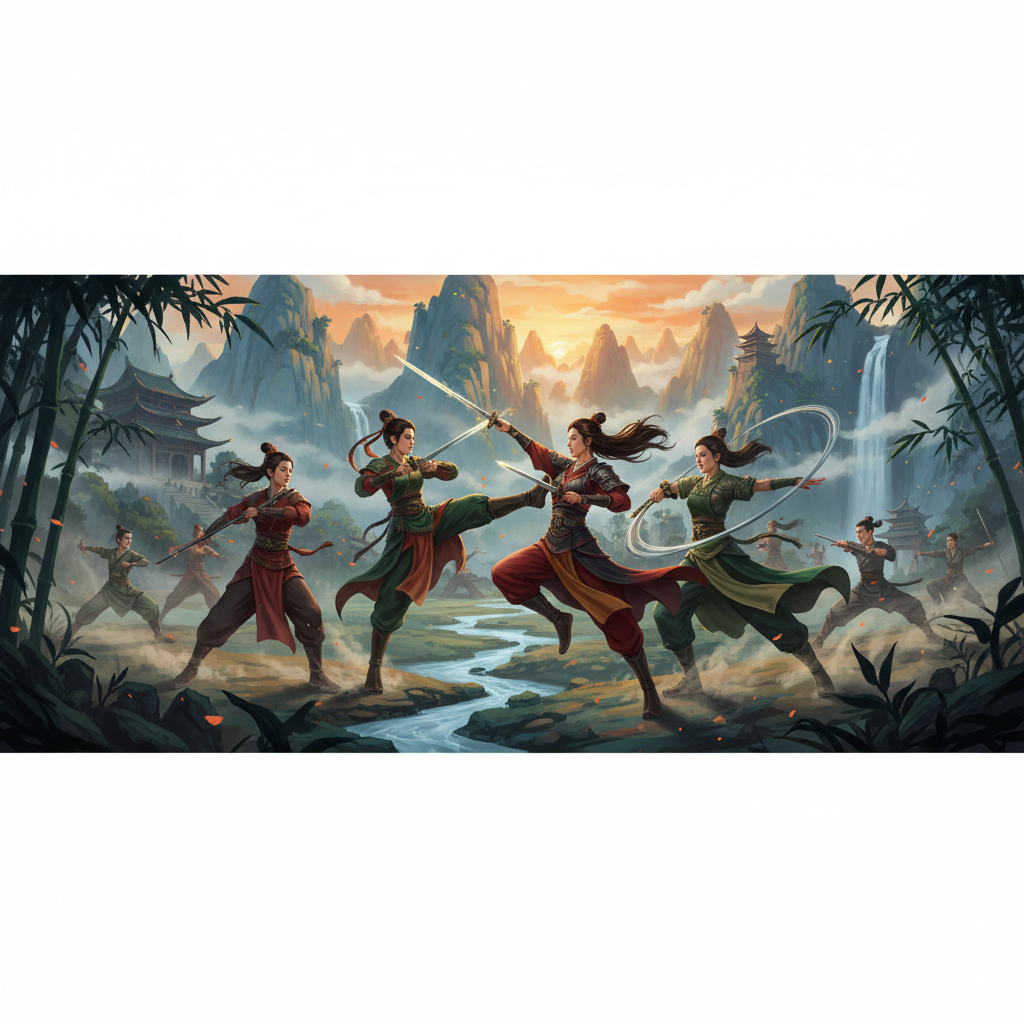
Introduction: The Rise of Women Warriors in Chinese Martial Arts Fiction
Chinese martial arts fiction, often known as wuxia, combines thrilling combat narratives with rich cultural traditions. Amid fantastical sword fights and chivalric codes, women warriors frequently play pivotal roles, challenging gender norms within the illustrious jianghu—the martial artists’ community. This article explores the compelling presence of female heroes in wuxia novels, illuminating their historical context, cultural significance, and lasting influence on the genre.
Historical Context: Women in Traditional Chinese Martial Arts and Literature
Historically, women in imperial China had limited public roles; however, legends and folklore often depicted exceptional female fighters such as Hua Mulan and Qin Liangyu. These narratives laid the foundation for wuxia fiction’s dynamic heroines. In reality, some women trained in martial arts for self-defense or to support family clans, especially in turbulent periods like the Ming and Qing dynasties.
Wuxia fiction, flourishing from the early 20th century with authors like Jin Yong and Gu Long, reimagined these female figures, blending historical elements with fantasy. Women warriors in novels echoed societal changes, reflecting feminist ideals while still embracing the romanticized code of jianghu chivalry.
Jianghu Culture: A Unique World Where Women Warriors Thrive
The jianghu is a conceptual martial “underworld"—a vibrant society governed by honor, loyalty, and complex alliances rather than formal laws. It provides a fertile backdrop for women warriors to navigate treacherous politics and combat rival sects with skill and cunning.
Female characters in this world often balance fierce independence with deep loyalty to friends and mentors. They wield traditional weapons like the jian (straight sword) or utilize inner martial arts techniques, showcasing a blend of physical prowess and strategic intelligence. Their stories frequently involve quests for justice, revenge, or reclaiming honor, resonating with readers as narratives of empowerment within a patriarchal context.
Iconic Women Warriors in Wuxia Novels: Strength and Legacy
Numerous legendary female characters have shaped wuxia literature’s portrayal of women warriors:
- Xiao Long Nu from Jin Yong’s The Return of the Condor Heroes embodies ethereal beauty and martial mastery, reflecting both vulnerability and formidable strength.
- Huang Rong, also by Jin Yong, is a brilliant strategist whose wit complements her martial skills, symbolizing intellect and resourcefulness.
- Dongfang Bubai, a complex figure from The Smiling, Proud Wanderer, represents a controversial blending of gender and power, challenging traditional binaries through mastery of notoriously difficult martial arts.
These characters transcend mere action roles, offering nuanced portrayals that explore identity, sacrifice, and agency. They inspire adaptations across film, television, and graphic novels, underscoring their cultural resonance.
Cultural Significance: Challenging Gender Stereotypes and Inspiring Readers
Women warriors in wuxia fiction serve as cultural agents challenging rigid gender ideals. Their narratives often subvert expectations by presenting female characters as leaders, strategists, and fighters equal to or surpassing male counterparts.
This empowerment extends beyond fiction: many readers—especially women—find inspiration in these stories, motivating interest in traditional martial arts and fostering broader conversations about gender roles in contemporary Chinese society. The jianghu’s fluid moral universe allows for exploration of complex identities, making wuxia a progressive literary space despite its classical roots.
Conclusion: The Enduring Appeal of Wuxia’s Women Warriors
Women warriors remain an integral and dynamic element within Chinese martial arts fiction. Through their blend of historical echo, cultural symbolism, and vibrant storytelling, they enrich the jianghu universe with compelling perspectives on strength, honor, and justice. As wuxia continues to evolve globally, these heroines stand as timeless icons of female empowerment and cultural heritage.
For enthusiasts and newcomers alike, exploring these women’s stories offers not just entertainment but also valuable insights into Chinese culture’s nuanced approach to gender and heroism.