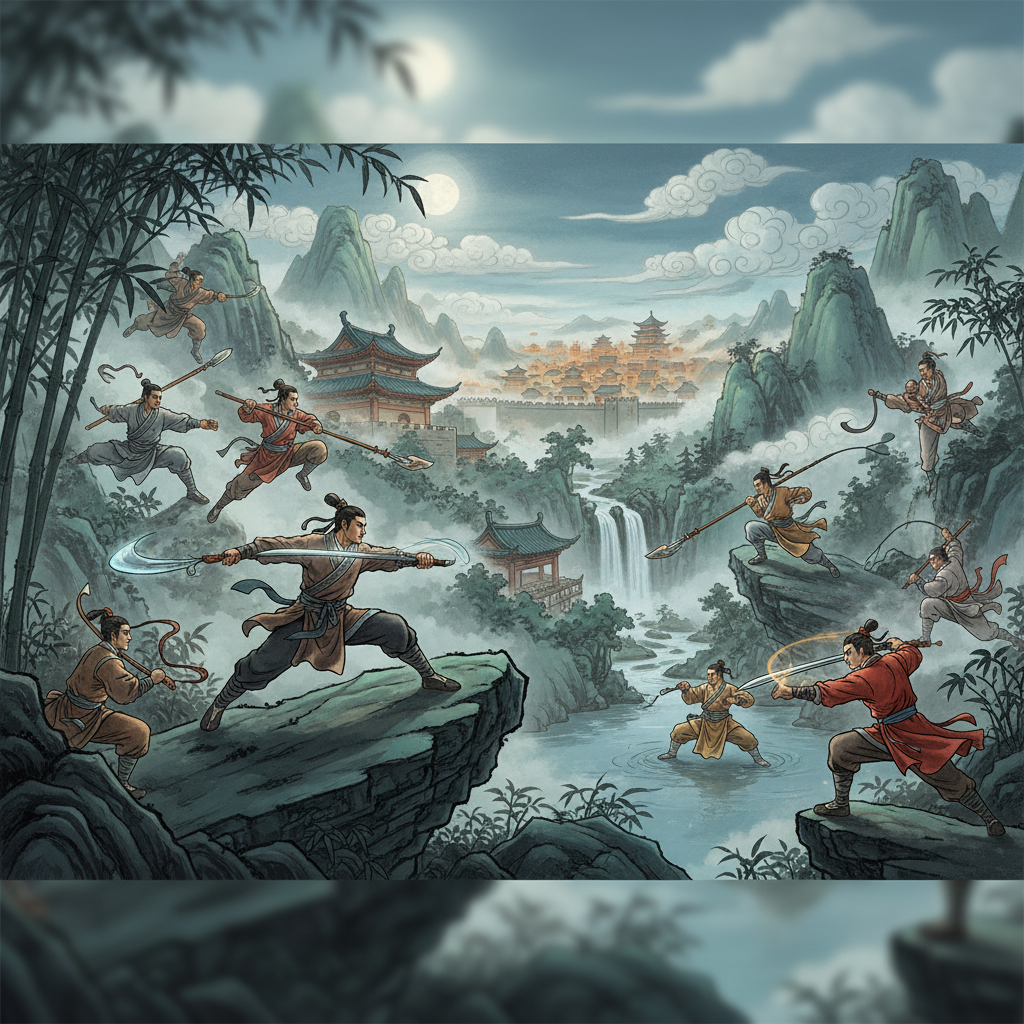
Introduction to Wuxia and Jianghu Culture
Chinese martial arts fiction, commonly known as wuxia, offers readers a captivating glimpse into the world of warriors, heroes, and the intricate dance of combat techniques. The term 'jianghu' refers not just to an alternative realm where these stories unfold but also encapsulates a unique culture defined by code, honor, and a deeply ingrained sense of justice. Central to this genre is the sophisticated portrayal of weapons, each embodying the principles of martial arts and contributing to the narrative's deeper significance.
Historical Significance of Weapons in Martial Arts
Throughout China's history, weapons have held crucial roles not just on battlefields, but also in the fabric of its folklore and literature. Traditional weapons—swords, staffs, and various bladed instruments—serve as symbolisms of strength, skill, and character. In the context of wuxia, these weapons are not merely tools of combat; they represent the ethos of the warrior. The sword, for example, often signifies morality, a draw between righteousness and evil; its wielder must constantly walk the fine line between justice and vengeance.
The historical evolution of these weapons reflects the changing dynamics within Chinese society from the military might of dynasties to the philosophical depths of Confucianism and Daoism. Wuxia fiction cleverly intertwines these historical narratives, allowing modern readers to connect with a rich tapestry of cultural significance through the depiction of weapons and their usage in martial arts.
Iconic Weapons of Wuxia: More Than Just Blades
In the sprawling world of wuxia, each weapon possesses its own legend and character, integral to the stories woven by authors. Some iconic weapons that stand out include:
1. The Jian (Sword)
The jian is often viewed as the quintessential wuxia weapon, symbolizing both elegance and lethal precision. It is frequently associated with righteous heroes journeying to combat injustice. The jian’s double-edged nature reflects the moral complexity of its wielders, who must choose when to strike and when to show mercy.
2. The Staff (Gun)
Representing versatility and adaptability, the staff in wuxia literature embodies a range of martial philosophies. It highlights the importance of technique in overcoming brute strength, teaching that wisdom triumphs over aggression. Chapters featuring staff fights are often tinged with philosophical lessons, revealing much about the protagonist's inner conflicts.
3. The Hook Sword
An unusual yet fascinating weapon, the hook sword represents complex martial skills and deep strategy. It often appears in tales as a tool wielded by cunning martial artists who prefer outsmarting their opponents over direct confrontation.
Weapons Training and Martial Discipline in Wuxia
In the jianghu culture, the training required to master a weapon is depicted as a profound journey of self-discovery and enlightenment. Novels often illustrate rigorous practice regimes, emphasizing that true strength lies not merely in physical prowess but also in mental discipline and moral integrity.
Heroes undergo formidable training under masters, honing their skills through meditative practices and ethical teachings. This aspect of training resonates with Daoist beliefs, where balance, patience, and harmony are essential components both in martial arts and life. As such, the adherence to a code of conduct, along with weapon mastery, becomes a vehicle for personal growth and societal contribution.
The Role of Weapons in Jianghu Dynamics
The dynamics of jianghu society are often dictated by weapon mastery, as combat skills directly influence social status, alliances, and enmities. Characters must navigate a world filled with rival sects, betrayals, and honor codes where a single duel can dictate an entire storyline.
Weapons in these stories serve to delineate power structures—whether it’s a lone warrior fighting oppressive forces or sects vying for supremacy. Conflicts often arise from disputes over weapon ownership, showcasing how these artifacts carry immense social weight. Readers witness the interplay of loyalty, revenge, and honor through martial arts battles that are echoing ancient traditions, thus creating a rich narrative backdrop that emphasizes the weight of choice in wielding power.
Conclusion: The Legacy of Weapons in Wuxia Fiction
Weapons in Chinese martial arts fiction transcend their physical forms; they become pivotal in shaping the moral and philosophical discourse within the jianghu. Every blade, every staff, and even each grappling hook symbolizes deeper truths about human nature and societal values. Through their stories of struggle, redemption, and discovery, these weapons continue to inspire modern interpretations of heroism and justice.
As we delve deeper into the realms of wuxia novels, the weapons serve as enduring symbols of the eternal journey between spirituality and physical mastery, reminding us of the intertwined destinies of man and the tools he chooses to wield.