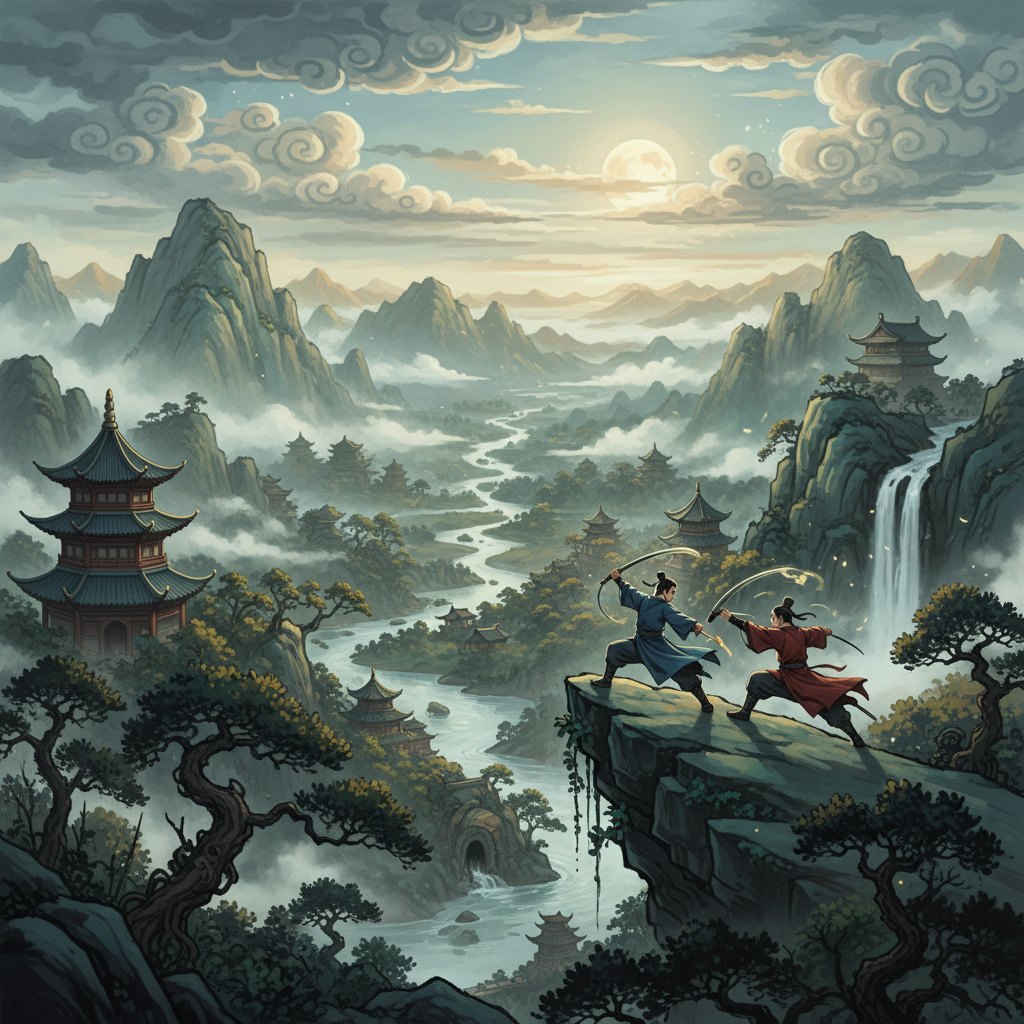
Introduction to Wuxia: The World of Chinese Martial Arts Fiction
Wuxia (武侠), literally meaning "martial heroes," represents a unique genre of Chinese fiction blending martial arts, chivalry, and adventurous storytelling. Originating from ancient Chinese folklore, wuxia fiction has evolved over centuries into complex narratives that celebrate martial prowess, moral philosophy, and the vibrant world of jianghu—the secretive martial arts community. At its core, wuxia encapsulates not just thrilling combat scenes but also the intricate journey of training, discipline, and honor that define a martial artist’s life.
The Historical Roots of Jianghu and Its Cultural Significance
The concept of jianghu (江湖), often translated as "rivers and lakes," is pivotal in wuxia narratives. Instead of a physical place, jianghu represents a subculture where martial artists, sects, and wanderers coexist, often separate from mainstream society. Historically, jianghu draws inspiration from ancient Chinese social outcasts, monks, rebels, and mercenaries who found solace and survival through martial arts. This metaphorical realm frames wuxia’s moral landscape—a world where loyalty, righteousness, and personal codes reign supreme.
Understanding jianghu is essential to appreciating wuxia fiction’s cultural depth. It portrays a duality between lawless freedom and disciplined order, reflecting broader Chinese philosophies such as Confucianism and Taoism. Jianghu serves as a narrative device to explore justice outside rigid societal structures, symbolizing the eternal struggle between chaos and order.
The Art and Discipline of Kung Fu Training in Wuxia Novels
Central to wuxia stories is the depiction of kung fu (功夫) training—both physical and spiritual. Authors emphasize rigorous routines, secret techniques, and the cultivation of inner energy (qi) as vital components of a martial artist’s development. Training often involves mastering specific fighting styles such as Tai Chi, Shaolin kung fu, or unique fictional moves passed down through lineages.
The progression typically follows a layered approach: beginners start with basic forms and stances, advancing to internal energy cultivation and finally to powerful secret techniques called "inner arts." This progression mirrors traditional Chinese martial arts pedagogy, where discipline, patience, and philosophy are emphasized alongside physical prowess. In many wuxia tales, training sequences symbolize a character's growth journey—balancing perseverance, morality, and self-discovery.
Iconic Kung Fu Novels and Their Legacy
The wuxia genre owes much of its popularity to pioneering novelists such as Jin Yong (Louis Cha) and Gu Long, whose works laid foundational tropes and stylistic elements. Jin Yong’s epic stories, including The Legend of the Condor Heroes, intricately weave martial arts training scenes with rich historical context and human drama, influencing countless adaptations in TV, film, and video games.
Gu Long’s novels, by contrast, often highlight complex characters navigating jianghu’s ambiguities, using terse, poetic prose to captivate readers. These classics introduced readers worldwide to the drama of martial sect rivalries, secret manuals, and legendary weapons—all set against authentic Chinese cultural backdrops. Through their influence, kung fu novels have become not only entertainment but also a medium preserving and spreading traditional martial arts culture.
Philosophical Underpinnings: Morality, Honor, and Self-Cultivation
Beyond physical techniques, wuxia fiction deeply incorporates Chinese philosophies. Confucian ideals of loyalty, filial piety, and righteousness frequently clash with Taoist notions of naturalness, spontaneity, and yin-yang balance. The ultimate martial hero embodies this synthesis—using kung fu not just for combat but for self-cultivation and harmony with the world.
Training is often portrayed as a transformative process—not merely acquiring skills but refining one’s character. Many novels explore themes of sacrifice, redemption, and the search for justice within the morally ambiguous jianghu. This dynamic elevates wuxia fiction from mere action stories to allegories about human nature, society, and ethical conduct.
Conclusion: The Enduring Appeal of Wuxia and Kung Fu Training
Chinese martial arts fiction remains a vibrant cultural phenomenon because it combines thrilling storytelling with rich historical, philosophical, and cultural layers. The depiction of kung fu training in wuxia novels highlights the discipline, perseverance, and moral refinement integral to traditional martial arts. Meanwhile, the imaginative world of jianghu offers readers a glimpse into a timeless cultural space where honor, skill, and justice transcend ordinary life.
As modern audiences continue to discover wuxia through literature, films, and interactive media, the enduring lessons embedded in kung fu training and jianghu culture resonate universally—reminding us that martial arts is not just about combat but about lifelong learning and ethical living.