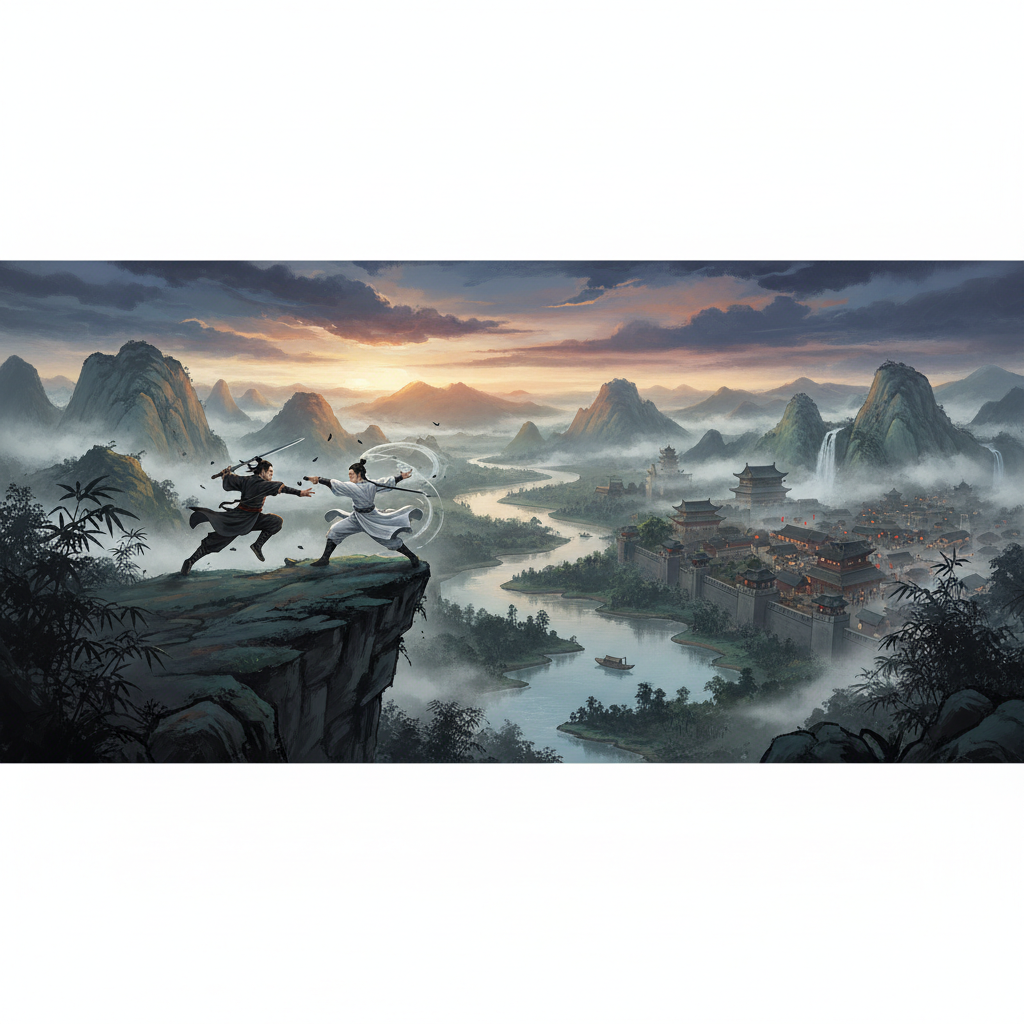
Introduction to Chinese Martial Arts Fiction and Wuxia Novels
Chinese martial arts fiction, known as wuxia (武侠), is a vibrant literary genre that intertwines tales of heroism, moral codes, and martial prowess set against the backdrop of ancient China. Rooted in folklore, history, and philosophical traditions, wuxia novels vividly portray the lives of wandering martial artists who navigate the jianghu (江湖)—a complex, semi-mythical underworld governed by its own rules and values. These stories have evolved over centuries, reflecting societal shifts while remaining a crucial medium through which Chinese culture engages with themes of honor, loyalty, and justice.
The genre surged in popularity during the early 20th century but draws upon traditions that go back to classical poetry and drama. Author Jin Yong (Louis Cha), Gu Long, and Liang Yusheng are among the most celebrated writers who helped redefine wuxia literature, blending intricate plots with deep characterizations and philosophical musings on the nature of power and righteousness.
The Concept of Jianghu: A World Beyond the Ordinary
At the heart of wuxia fiction lies the concept of jianghu, often translated as “rivers and lakes,” which metaphorically represents a society parallel to the imperial state. This world is populated by sects, clans, and lone wanderers who exist outside or on the fringes of conventional authority. Jianghu functions both as a physical and symbolic space where martial artists duel, alliances form or dissolve, and codes of chivalry prevail.
Jianghu is not merely a setting but a cultural ethos, embodying freedom, rebellion, and a complex moral landscape. The jianghu is governed by informal laws and the warriors’ code—often called xia (侠)—characterized by loyalty, righteousness, and protection of the weak. This code contrasts with the rigid social hierarchies of traditional Chinese society, allowing characters to express idealized virtues and challenge corrupt powers.
Sects and Clans: Pillars of Martial Arts Society
Central to wuxia narratives are the various sects (门派) and clans (宗族) that organize jianghu society. These groups often have unique fighting styles, secret martial techniques, and distinctive philosophies. Famous sects such as the Shaolin Temple, Wudang, and Emei are deeply embedded in both historical reality and literature, serving as centers for spiritual cultivation and martial training.
The internal dynamics between these sects fuel much of the drama in martial arts fiction—rivalries, alliances, betrayals, and quests for supremacy generate compelling storylines. Sects symbolize not only martial skill but also cultural identities tied to geography and tradition, reinforcing a sense of belonging and purpose for their members. The mentor-disciple relationships within sects highlight Confucian values such as respect for hierarchy and lineage, while also allowing personal growth through trials and tribulations.
Cultural Significance of Kung Fu Novels in Chinese Society
Kung fu novels extend beyond entertainment; they function as cultural artifacts reflecting Chinese values and historical consciousness. Through martial arts heroes, these stories explore themes of justice, sacrifice, and the quest for self-discovery. The genre also serves as a bridge between classical Chinese thought—Confucianism, Taoism, and Buddhism—and popular imagination, blending ethical dilemmas with metaphysical concepts.
Moreover, wuxia fiction has played a significant role in shaping modern Chinese identity by romanticizing the past and elevating the ideal of the youxia (游侠), or wandering knight-errant. This figure represents resistance against tyranny and upholds personal integrity, inspiring audiences through virtues that resonate across social classes and decades. The genre's resurgence in global media further amplifies its cultural reach, influencing cinema, television, and video game narratives worldwide.
Intriguing Details: Martial Arts Techniques and Secret Manuals
An essential aspect of wuxia fiction is the portrayal of extraordinary martial arts abilities, often described with vibrant terminology and imaginative techniques. Stories revolve around mastering secret manuals, each containing profound knowledge of combat forms, internal energy cultivation (qi), and unique weapon skills. These manuals are sometimes coveted treasures or sources of conflict, symbolizing the transmission of wisdom and power.
Techniques like the “Nine Yang Divine Skill” or “Lightness Skill” blend fantasy with traditional Chinese physiology and metaphysics, enhancing the mystique of martial practice. The emphasis on internal cultivation (neigong) and external strength (waigong) draws heavily from Daoist and Buddhist practices, integrating spiritual discipline with physical mastery. This complex layering enriches the reading experience, appealing to both action enthusiasts and philosophical seekers.
Conclusion: The Enduring Legacy of Wuxia and Jianghu Culture
Chinese martial arts fiction encapsulates a distinctive cultural phenomenon where storytelling transcends simple adventure to probe deep moral and existential questions. Through the richly constructed worlds of jianghu, sects, and clans, wuxia novels capture the imagination while preserving traditional values and philosophies. They continue to inspire new generations and cross-cultural dialogues, affirming wuxia as a cornerstone of Chinese literary and cultural heritage.
As the genre adapts to contemporary forms—digital novels, films, and interactive media—the spirit of the martial hero and the allure of jianghu persist, inviting readers and viewers alike to explore the timeless dance of sword and soul.