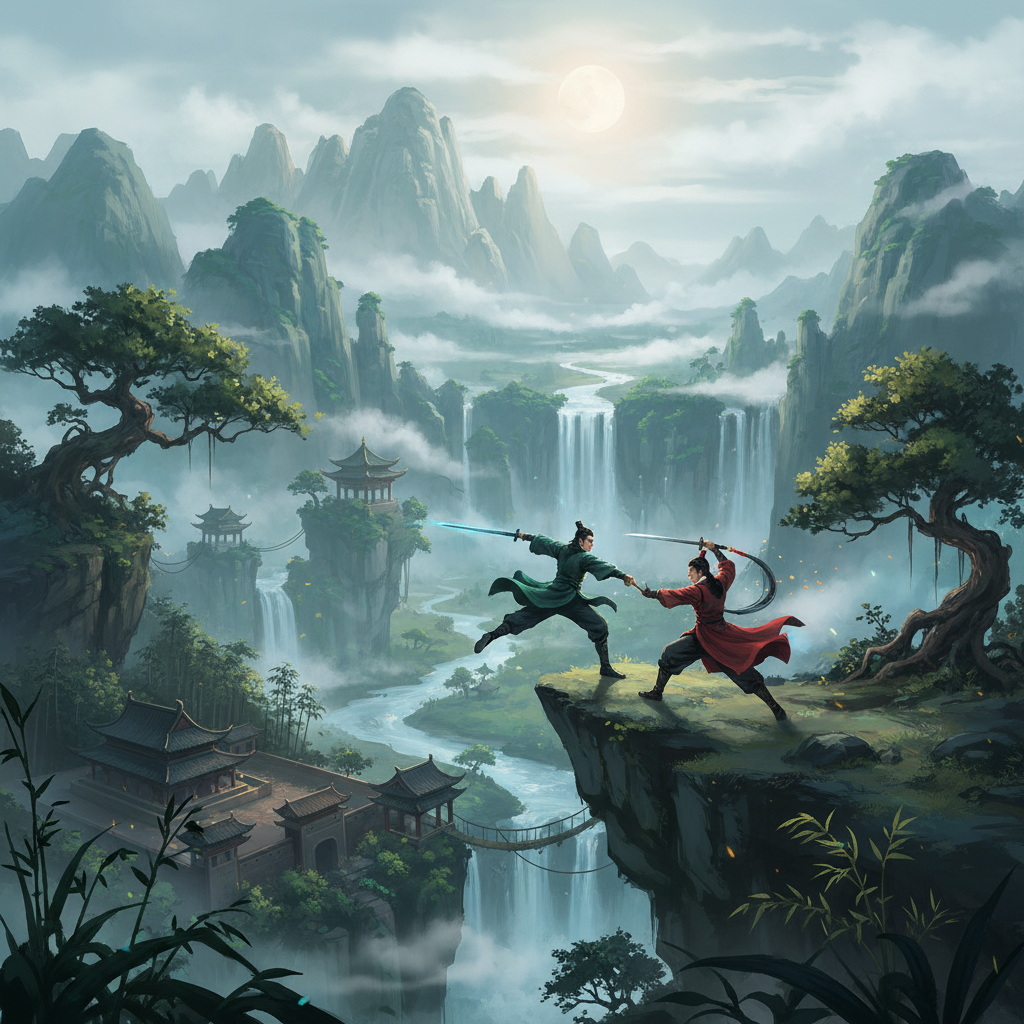
Historical Origins of Chinese Martial Arts Fiction
Chinese martial arts fiction, commonly known as wuxia (武侠), is a vibrant literary genre that merges martial prowess with chivalric ideals. The roots of wuxia storytelling date back over a thousand years, tracing influences to early Chinese legends and classical prose such as the Tang dynasty’s chivalric tales and the Song dynasty’s vernacular literature. By the Ming and Qing dynasties, wuxia novels became immensely popular through works like Water Margin (Shuihu Zhuan) and The Legend of the Condor Heroes by Jin Yong in the 20th century. These narratives blend mythical martial arts techniques with historical and fictional settings, captivating readers with tales of heroism, loyalty, and honor.
Understanding the Concept of Jianghu: The Mythical Martial World
At the heart of wuxia fiction lies the concept of jianghu (江湖), literally translated as “rivers and lakes,” yet metaphorically understood as a parallel society existing alongside the mundane world. Jianghu is a fluid, often lawless space where martial artists, outlaws, heroes, and sects coexist under their own codes. It is not tied to political authority but governed by personal honor and the unwritten rules of conduct. The jianghu culture encompasses secret schools, rival sects, wandering swordsmen, and chivalrous women, creating a dreamlike realm that celebrates freedom and individual morality beyond conventional society. This conceptual framework serves as a rich canvas for narrating tales of adventure, rivalry, and personal growth.
Cultural Significance and Philosophical Underpinnings
Wuxia fiction is deeply entrenched in Chinese philosophical traditions, especially those of Confucianism, Taoism, and Buddhism. The values portrayed often emphasize righteousness (义, yi), loyalty, humility, and the quest for spiritual enlightenment through martial discipline. Taoist principles inform the focus on harmony with nature and the flow of qi (气), or vital energy, integral to internal martial arts depicted in wuxia stories. Meanwhile, Confucian ethics shape the chivalrous code that guides protagonists’ actions, highlighting sacrifice for the greater good and respect for hierarchy within martial sects. Thus, wuxia fiction serves both as entertainment and as a reflection of Chinese ethical and philosophical ideals, allowing audiences to explore complex moral questions through thrilling narratives.
The Intricacies of Kung Fu Novels and Martial Arts Techniques
Kung fu novels, a subgenre of wuxia, intricately detail martial arts styles and extraordinary techniques that blur the line between reality and fantasy. These include dazzling internal energy cultivation, such as the mystical Nine Yin Manual or the legendary Dragon Claw Hand featured in many classic works. Authors use these fantastical skills to symbolize deeper psychological or spiritual transformations characters undergo on their heroic journeys. The meticulous descriptions of training regimens, battles, and secret martial techniques captivate readers while instilling respect for traditional Chinese martial arts. This layered storytelling bridges myth and martial heritage, inspiring both literary admiration and practical interest in kung fu culture.
Wuxia’s Enduring Legacy in Modern Media and Popular Culture
The influence of wuxia and jianghu culture extends well beyond literature into cinema, television, and video games, both in China and internationally. Classic wuxia films directed by icons like King Hu and Zhang Yimou introduced cinematic expressions of martial arts poetry, acrobatics, and mythic heroism to global audiences. Contemporary adaptations continue to popularize jianghu culture, blending traditional elements with modern storytelling techniques. Furthermore, wuxia themes resonate in global martial arts communities and contribute to the growing fascination with Eastern philosophies and martial practices worldwide. This enduring legacy highlights wuxia fiction’s role as a cultural bridge that promotes Chinese heritage while evolving with contemporary tastes.
Conclusion: Why Wuxia Fiction and Jianghu Culture Matter Today
Chinese martial arts fiction is not merely a genre of escapist fantasy; it is a window into a distinctive cultural universe where history, philosophy, and mythology intertwine. The jianghu represents more than a physical place—it embodies ideals of justice, courage, and freedom that continue to inspire readers and viewers across generations. As modern society grapples with uncertainty and moral complexity, wuxia’s tales of heroic resilience and ethical dilemmas remain remarkably relevant. Exploring these magnificent narratives offers insight into Chinese cultural identity and enriches our understanding of universal human values through the mythical lands of martial arts fiction.