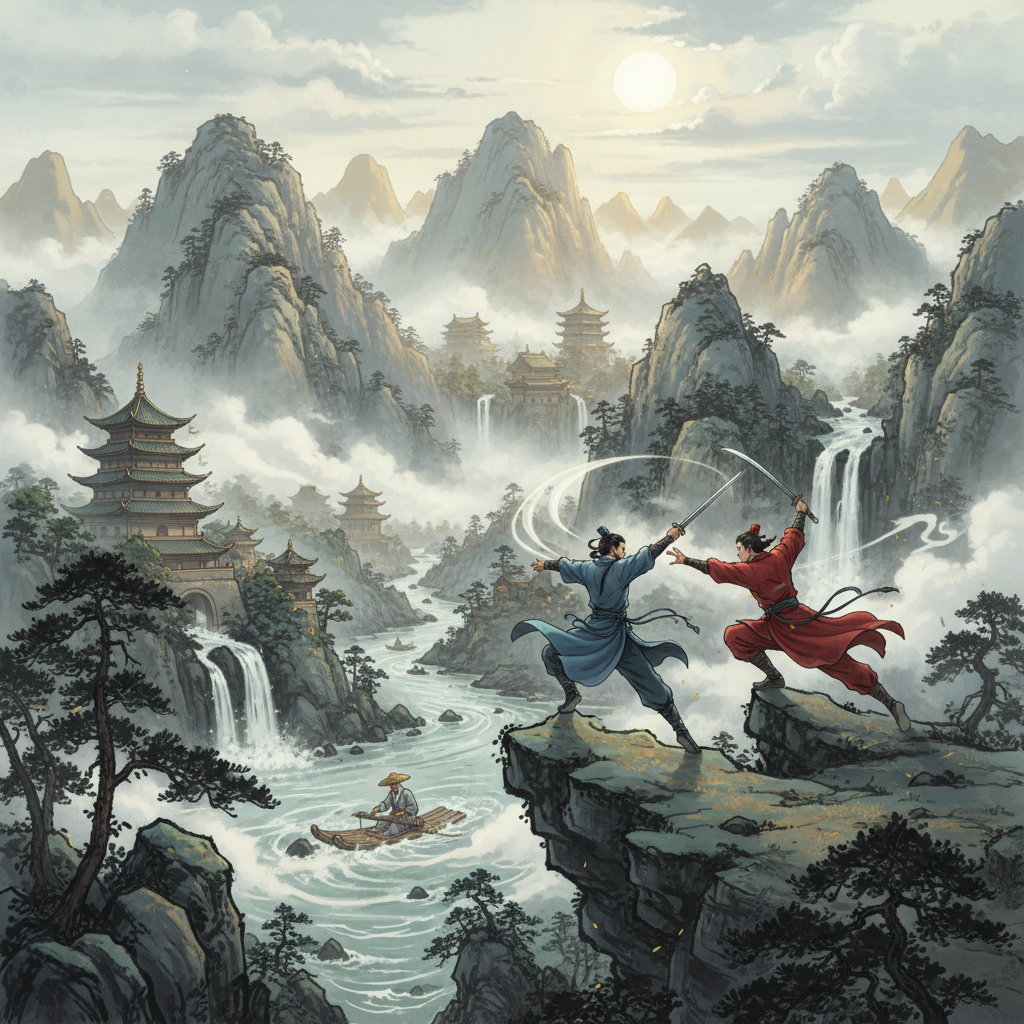
Introduction to Wuxia Fiction and Its Origins
Wuxia (武侠), literally translating to “martial heroes,” represents a unique and vibrant genre in Chinese literature focused on martial arts, chivalry, and adventure. Rooted in centuries-old folklore and the rich traditions of Chinese martial arts, wuxia fiction artfully blends action, philosophy, and cultural values. Emerging prominently during the early 20th century, wuxia novels captivated readers with their vivid portrayals of kung fu masters, heroic quests, and the shadowy, fluid world of jianghu (江湖), a term describing the community of martial artists living outside conventional society.
The tradition of martial arts storytelling can be traced back to classical Chinese texts and oral tales about swordsmen and fighters. However, the genre as we know it today developed through the literary works of novelists like Liang Yusheng, Jin Yong, and Gu Long. Their novels not only entertained but also introduced complex characters and intricate plots that highlighted Chinese virtues such as loyalty, honor, and justice.
The Concept of Jianghu: More Than Just a Setting
Central to understanding wuxia is the concept of jianghu, often translated as “rivers and lakes.” Far from merely a physical locale, jianghu symbolizes a parallel society where martial artists, sects, rebels, and outlaws coexist. It is governed by its own rules, customs, and moral codes—sometimes in stark contrast or even in rebellion against official norms and imperial authority.
Jianghu is a liminal space bridging reality and fantasy. Characters in this realm wrestle with their personal ambitions and loyalties, forging alliances and rivalries that drive the narrative tension. As a cultural construct, jianghu reflects deep Chinese philosophical themes, including the tension between individual freedom and social order, the virtue of self-cultivation, and the pursuit of justice outside the law.
Wuxia’s depiction of jianghu has permeated modern media, inspiring countless films, TV series, and games. It remains a fertile symbol for exploring ideas of identity, morality, and resistance.
Kung Fu Novels: The Heart of Martial Arts Literature
Kung fu novels or martial arts novels serve as the foundation of wuxia fiction. These tales are centered around protagonists skilled in traditional Chinese martial arts, often undergoing rigorous training to achieve mastery of various styles such as Tai Chi, Shaolin kung fu, or the mystical “inner energy” techniques known as neigong.
The appeal of kung fu novels lies not only in their dynamic fight scenes but also in the deep philosophical underpinnings. Martial arts in these stories are often symbolic of personal growth, discipline, and spiritual enlightenment. This layered portrayal elevates kung fu from mere physical combat to an art form intertwined with Chinese notions of balance, harmony, and self-realization.
Novels commonly depict sects—tightly knit groups of martial artists each with distinct techniques and ethical codes—competing and cooperating within jianghu. The narrative often explores themes of revenge, friendship, loyalty, and the pursuit of justice, offering readers moral dilemmas alongside action-packed adventures.
Historical and Cultural Significance of Wuxia
Wuxia fiction is more than entertainment; it reflects and informs Chinese cultural identity and history. Historically, the genre echoes periods of social instability like the fall of dynasties when official law faltered, and communities relied on martial heroes for protection and justice. Through wuxia, authors mythologize these figures as champions of the oppressed, embodying Confucian ideals of righteousness and loyalty despite operating outside official frameworks.
Moreover, wuxia stories preserve and popularize traditional Chinese martial arts and associated philosophical ideas. They often incorporate elements of Daoism, Buddhism, and Confucianism, melding spiritual beliefs with physical practice. This cultural transmission through fiction helps maintain the relevance of martial arts traditions in the modern era.
The genre’s evolution also tracks China’s own modernization and globalization. While early texts celebrated chivalric ideals within a feudal context, contemporary wuxia often grapples with themes of identity, nationalism, and cultural preservation amid rapid social change.
Interesting Details: Wuxia’s Influence on Pop Culture and Literature
Wuxia fiction has profoundly influenced global popular culture well beyond Chinese-speaking communities. International audiences have embraced wuxia films, notably those by directors such as King Hu and Ang Lee, which combine stunning choreography with philosophical storytelling. This cross-cultural appeal lies in wuxia’s fusion of epic narratives, moral complexity, and exhilarating combat sequences.
In literature, wuxia’s narrative techniques—such as multi-layered story arcs, deep character development, and a blend of realism with fantasy—have inspired writers in other genres and regions. Its storytelling methods contribute to the rise of “martial arts fantasy” globally, bridging East Asian traditions with Western epic fiction.
Interestingly, wuxia frequently blurs the lines between history and myth, integrating actual historical events and figures into its fabric while embellishing them with legendary feats. This blending serves as a cultural mirror reflecting Chinese values, fears, and aspirations across generations.
Conclusion: The Enduring Legacy of Wuxia and Martial Arts Novels
Today, wuxia fiction remains a dynamic and influential part of Chinese culture and world literature. By weaving together martial arts mastery, chivalric adventure, and profound philosophical inquiries, wuxia offers more than just thrilling tales—it opens windows into the martial soul and social imagination of China.
The jianghu world continues to inspire artists and audiences, reminding us that the story of the martial hero is also a story of human resilience, ethical struggle, and the pursuit of justice beyond the boundaries of conventional society. As wuxia evolves, its blend of tradition and innovation will undoubtedly continue to captivate new generations worldwide.