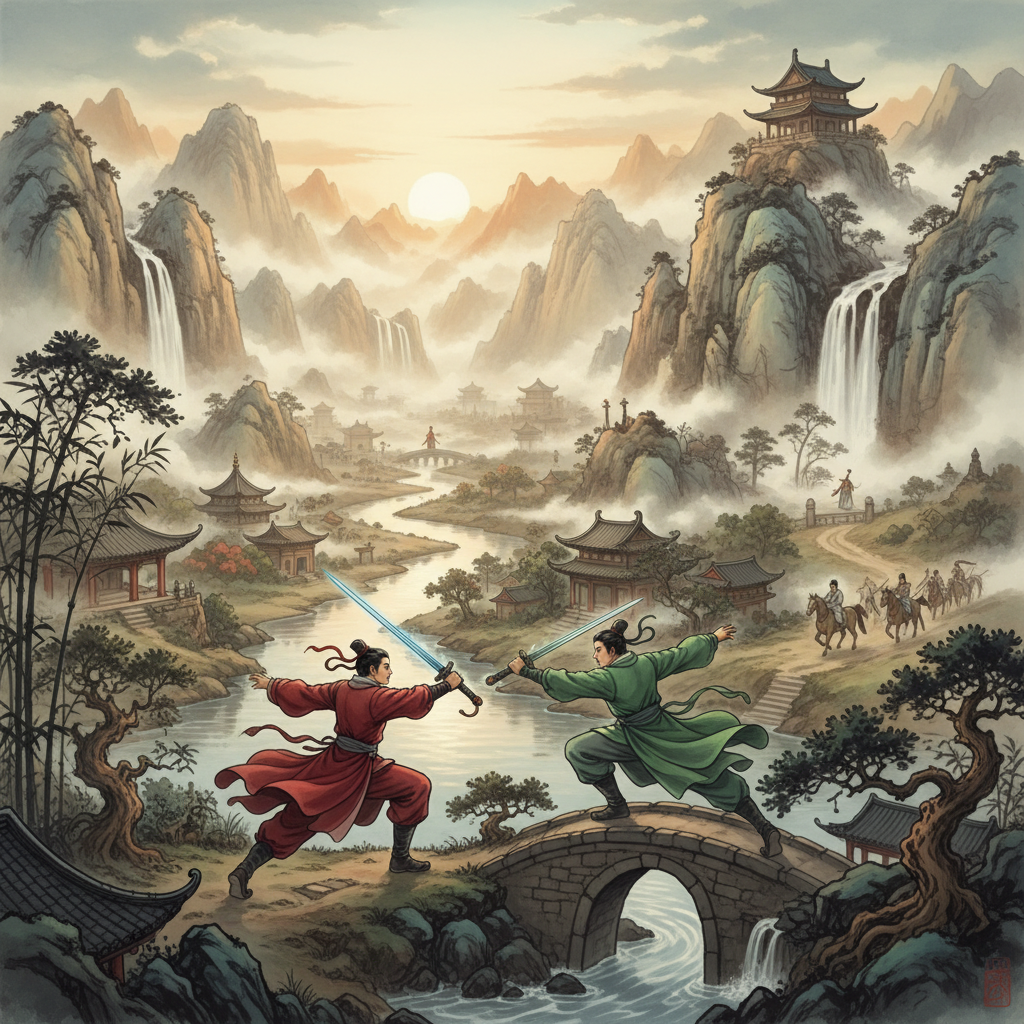
The Rich Tapestry of Wuxia Fiction
Wuxia, a term that translates to “martial heroes,” refers to a genre of Chinese fiction that centers around martial arts, chivalry, and the extraordinary lives of roving warriors. Born from a blend of historical events and folklore, wuxia fiction allows readers to immerse themselves in a world where honor, loyalty, and skill are of utmost importance. The genre has evolved significantly over centuries, capturing the imaginations of many and leaving an indelible mark on Chinese literature.
Historically, the roots of wuxia can be traced back to ancient Chinese literature, with early examples found in texts like the Water Margin and Journey to the West. These narratives portrayed the conflicts and adventures of outlaws and monks, establishing a foundation for the hero archetypes later prevalent in wuxia. By the mid-20th century, writers like Jin Yong (Louis Cha) and Gu Long revitalized and popularized the genre, crafting intricate stories blending martial arts with romantic and philosophical elements.
Jianghu: The Underworld of Heroes
Integral to the world of wuxia is the concept of jianghu, a term that literally means "rivers and lakes." In this context, jianghu refers to the community of martial artists, rogues, and outcasts who navigate the moral and social complexities of their world. It is a metaphorical space outside the constraints of conventional society, allowing characters the freedom to pursue their quests for honor, revenge, and redemption.
The jianghu culture is characterized by its code of conduct, which emphasizes camaraderie, integrity, and mastery of martial arts. Characters often engage in battles to maintain their honor or to settle grievances, following a strict principle of "eye for an eye." This community fosters relationships grounded in loyalty, with sects and clans forming alliances and rivalries that further complicate their adventures.
Cultural Significance of Wuxia
The cultural significance of wuxia fiction extends beyond mere entertainment. These stories reflect the socio-political landscape of China, often addressing themes of justice and moral righteousness. During times of social upheaval, such as the aftermath of World War II, wuxia literature became a vehicle for expressing resistance against oppression and a longing for national identity.
Furthermore, wuxia narratives often interlace traditional Chinese philosophical concepts, particularly those influenced by Confucianism, Daoism, and Buddhism. The nuanced portrayal of virtue, the quest for self-cultivation, and the balance between yin and yang in martial arts mirror the complexities of life itself, emphasizing personal growth and moral dilemmas faced by the characters.
Iconic Elements of Kung Fu Novels
At the heart of any gripping kung fu novel is a hero, often presented as a misunderstood loner or a prodigy. These heroes are characterized by their exceptional martial arts skills, which can be either acquired through rigorous training, as seen in the Shaolin Temple tradition, or innate talents that set them apart from their peers.
Training sequences, elaborate fight scenes, and vivid descriptions of martial arts styles define the pacing and excitement of kung fu novels. Techniques such as internal energy cultivation (neijia) and external fighting techniques (waijia) are common, with authors crafting elaborate, visually stunning makeup of battles, invoking the reader's imagination to visualize the martial arts choreography.
In addition, weapons play a critical role in these stories. Swords, staffs, and other traditional arms are not merely tools of combat; they often symbolize the character's moral standing and personal journey. The use of legendary weapons, imbued with history and power, adds depth to the narrative and underscores the mythic quality of the heroes’ journeys.
The Global Rise of Wuxia Influence
In recent years, the influence of wuxia fiction and the aesthetic of kung fu have transcended Chinese borders. Global audiences have become captivated by Hollywood interpretations, most notably through films directed by Ang Lee and Zhang Yimou, which showcase the stunning visuals and intricate choreography that characterize the genre.
The rise of streaming services has also facilitated a resurgence of interest in wuxia dramas, with adaptations of popular kung fu novels drawing in viewers from around the world. These adaptations highlight not only the action-driven narratives but also the rich cultural landscapes that accompany them, effectively bringing the essence of jianghu to international audiences.
Conclusion: The Enduring Legacy of Wuxia
The world of wuxia continues to be a wellspring of creativity and cultural reflection. As authors reimagine age-old tales for new generations, the enduring themes of honor, friendship, and the quest for meaning in a chaotic world resonate deeply. Through the lens of jianghu culture and martial arts narratives, readers are invited to explore a universe rich with imagination, history, and moral philosophy—a legacy that continues to inspire and entertain across cultures.