The Origins and Evolution of Wuxia Fiction
Wuxia, often translated as "martial heroes," is a distinctive genre of Chinese fiction that revolves around martial arts and chivalric values. The roots of wuxia can be traced back to ancient Chinese folklore, ballads, and historical tales, flourishing during the Tang and Song dynasties when stories of heroism and righteousness captivated audiences. Over centuries, these narratives evolved into the more structured novel format we recognize today.
The canon of wuxia literature gained significant traction in the early 20th century, with authors like Jin Yong (Louis Cha) and Gu Long introducing modern storytelling techniques. Their novels not only depicted spectacular martial arts battles but also intertwined personal quests, moral dilemmas, and the quest for justice, making them timeless and relatable narratives.
Understanding Jianghu Culture
At the heart of wuxia fiction lies the concept of jianghu, a term that literally translates to "rivers and lakes" but symbolizes a unique, semi-mythical world inhabited by martial artists, wanderers, and outlaws. Jianghu represents a realm outside the bounds of mainstream society where individuals are bound by martial codes and chivalric virtues rather than by law.
In jianghu, heroes often face dilemmas that challenge their loyalty, honor, and personal beliefs, while relationships are characterized by intricate social networks, forming alliances or rivalries based on a shared code of ethics. This culture is enriched by its own lexicon filled with colorful slang, which adds depth and realism to the narratives. Terms like "zhongyong" (loyalty and honor) or "xia" (chivalry) frequently emerge, underscoring the cultural underpinnings of this enigmatic society.
The Significance of Kung Fu Novels
Kung fu novels offer more than just thrilling tales of combat; they are a mirror reflecting Chinese history, philosophy, and cultural values. These stories often incorporate elements of Daoism and Confucianism, highlighting themes of balance, moral integrity, and the search for enlightenment. The martial arts practices depicted in these novels can be seen as metaphors for personal growth, reflecting the journey toward self-mastery and inner peace.
Moreover, kung fu novels have transcended literature, inspiring films, television dramas, and even video games, thus cementing their place in popular culture globally. The cinematic adaptations of these stories have not only introduced western audiences to the beauty of martial arts but also showcased the philosophical elements interwoven within them.
The Aesthetic Appeal of Wuxia
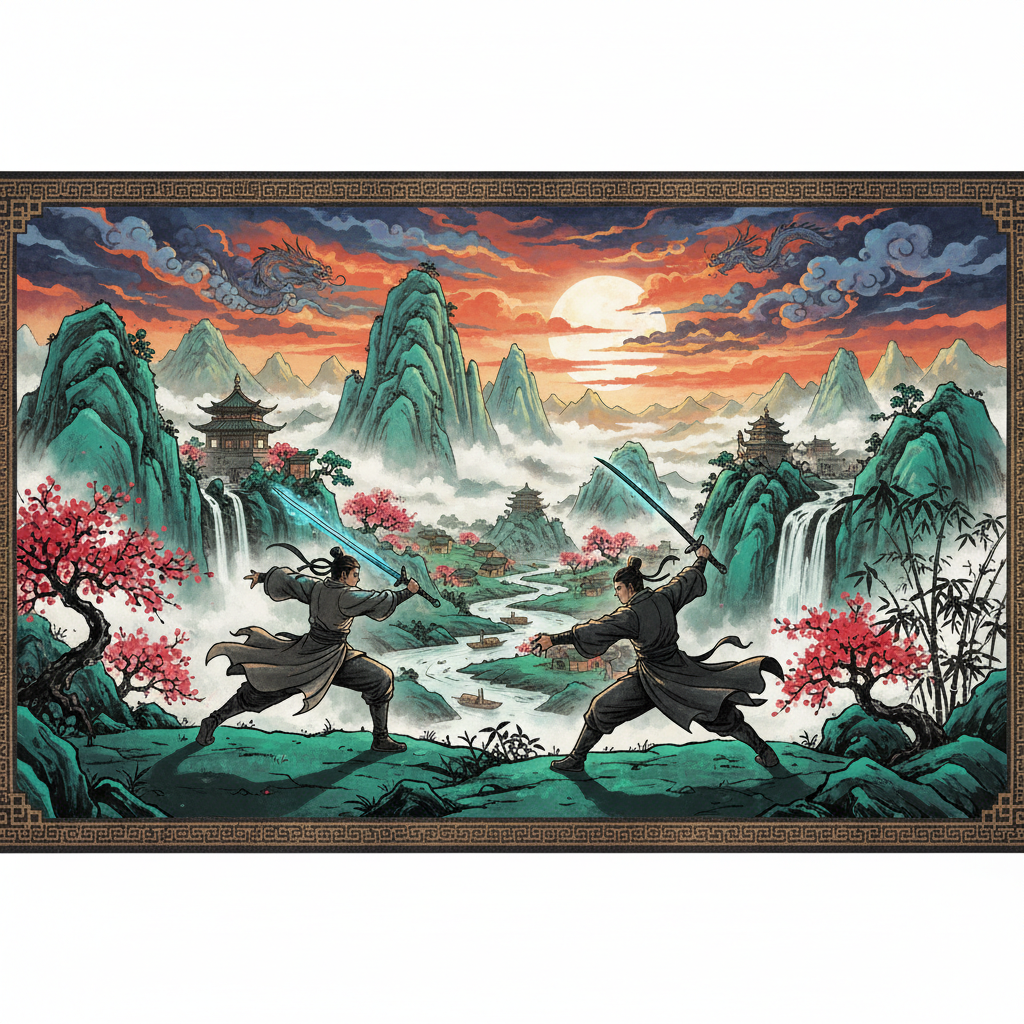
Wuxia fiction is celebrated for its vivid imagery and imaginative landscapes. The detailed descriptions of martial arts techniques and battles are often portrayed with poetic fervor, creating a vibrant tapestry of action and philosophy. This melding of artistry and martial prowess allows readers to visualize the breathtaking movements and intricate techniques used by the characters.
The martial arts themselves serve as an artistic expression, with choreography that resembles dance, reflecting centuries of tradition and discipline. Each kung fu style possesses its own philosophy and purpose, contributing to the narrative's richness and complexity.
Iconic Characters and Their Legacy
The protagonists in wuxia novels are often multifaceted characters that embody the ideals of jianghu culture. Characters such as Yang Guo from "The Condor Heroes" or Xiao Feng from "Demi-Gods and Semi-Devils" have become cultural icons, each representing different aspects of heroism, sacrifice, and the human condition.
These characters often grapple with their identities and destinies while navigating a world full of moral ambiguity. Their journeys resonate with readers, allowing for a profound connection between the audience and the struggles portrayed, thereby ensuring the enduring legacy of wuxia literature.
Conclusion: A Cultural Phenomenon
Wuxia and its associated jianghu culture represent a vibrant tapestry of historical legacy, philosophical inquiry, and artistic expression. The genre not only entertains but also invites readers to contemplate deeper moral and existential questions through its vivid narratives and compelling characters. As the popularity of wuxia continues to grow, both in China and around the world, it remains a significant cultural phenomenon that highlights the enduring power of storytelling in exploring human nature and the principles of harmony, honor, and justice.