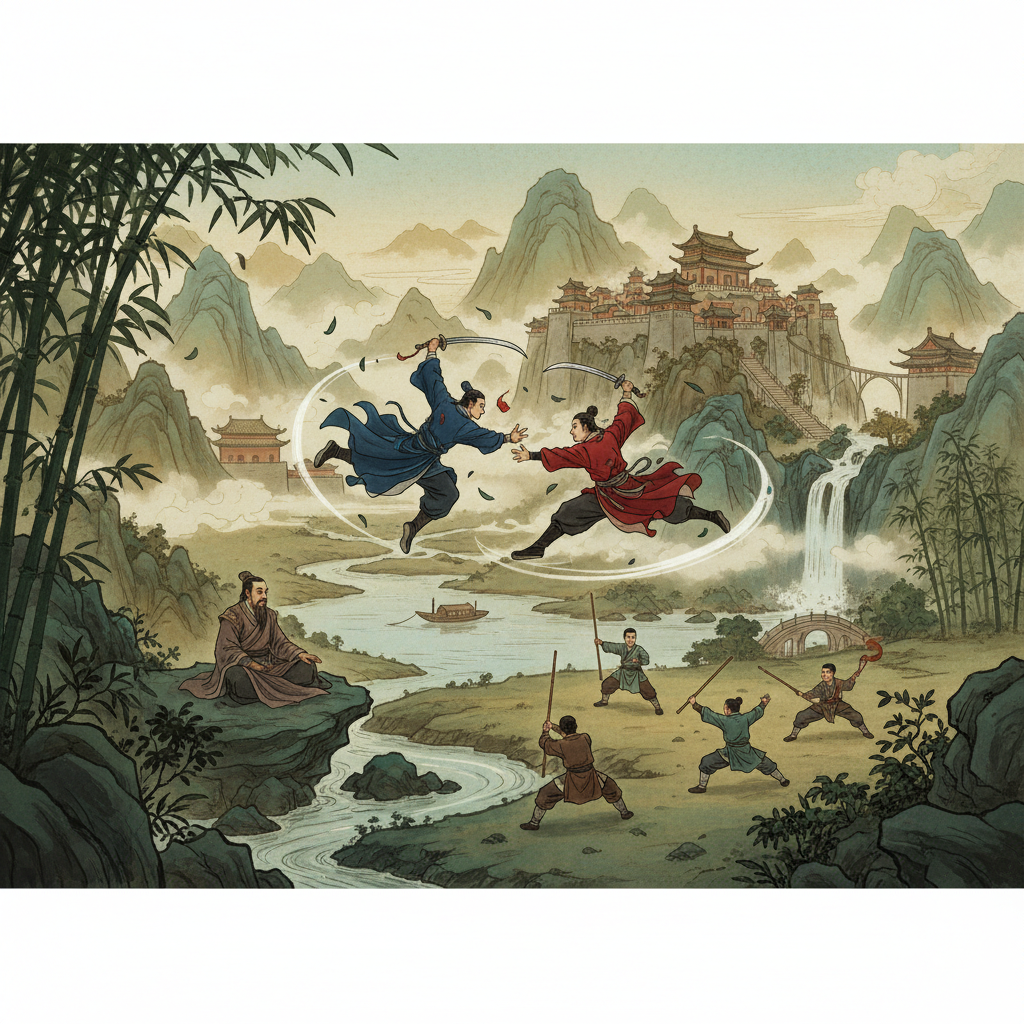
The Roots of Wuxia: Historical Context
Wuxia, a genre synonymous with extraordinary adventures and martial prowess, has its roots deeply embedded in ancient Chinese culture. Emerging during the Han dynasty (202 BC - 220 AD), the foundations of Wuxia can be traced back to historical tales of wandering heroes and martial artists. These figures traveled through the landscape, practicing their martial skills and embodying the values of loyalty, bravery, and righteousness. Historically, the genre reflects the societal turmoil and strife that characterized various dynasties, particularly the tumultuous periods when individuals sought to uphold justice in a world often fraught with corruption.
By the late Ming and early Qing dynasties, the genre flourished, merging folklore, history, and philosophy. One of the most pivotal works that shaped Wuxia literature was "The Water Margin" (Shui Hu Zhuan), published in the 14th century, which introduced the archetypal stories of outlaws and heroes who lived outside the law, driven by a quest for justice.
Unveiling Jianghu: The Martial Arts Community
Central to the narrative of Wuxia fiction is the concept of Jianghu, essentially the "rivers and lakes." In this context, Jianghu refers to the martial arts community but also serves as a metaphorical space where the social fabric is woven with honor, chivalry, camaraderie, and rivalry among practitioners. The Jianghu plays a crucial role in establishing the backdrop for many Wuxia stories, often serving as a character in its own right. It is a world where martial artists navigate complex relationships—not just with one another but also with the forces of authority, tradition, and morality.
In Jianghu, societal rules differ from those of the established law. Characters often operate outside conventional morality, enforced by alliances and codes of honor inherent to martial traditions. The idea of Jianghu encapsulates a vibrant subculture where virtues like loyalty, revenge, and personal honor are weighed against the backdrop of greater social justice. This duality offers readers a glimpse into ethical dilemmas faced by martial artists that resonate deeply throughout Chinese history and philosophy.
Iconic Authors and Their Contributions
The 20th century marked a transformative era for Wuxia literature, leading to the canonization of classic authors who would change the narrative landscape forever. Among these, Louis Cha (also known as Jin Yong) is perhaps the most recognizable name, with masterpieces such as “The Legend of the Condor Heroes” (射鵰英雄傳) and “The Return of the Condor Heroes” (神鵰俠侶).
Cha's novels combine intricate storytelling with detailed depictions of martial arts techniques, world-building, and philosophical discourses. He excelled in developing characters who are morally complex yet relatable, navigating a world that continuously tests their chivalry and virtue. His legacy has ensured that Wuxia continues to capture the imaginations of readers not just in China, but globally, leading to adaptations in film, television, and gaming.
Other notable authors like Gu Long contributed to the genre with a unique style marked by contemporary themes and a focus on psychological depth, highlighting emotional struggles faced by martial artists. Together, these writers created a duality in Wuxia fiction—rooted in tradition while embracing modern sensibilities.
Cultural Significance in Contemporary Society
The influence of Wuxia extends far beyond literature, permeating other cultural arenas such as film and television. Iconic films like "Crouching Tiger, Hidden Dragon" and "Hero" have illustrated the grandeur of martial arts, further igniting global interest in Wuxia narratives. This genre's visual representation is complemented by the intricate choreography of kung fu, adding layers of artistry to storytelling.
Moreover, Wuxia reflects the cultural values of Chinese society, emphasizing themes of loyalty, sacrifice, and justice. It serves as a medium to explore national identity amid globalization, allowing the younger generations to connect with their heritage in a rapidly changing world. The themes of adventure and the quest for personal honor resonate universally, appealing to a global audience.
The Future of Wuxia and Jianghu Culture
As digital platforms gain prominence, Wuxia fiction is evolving, incorporating modern storytelling techniques while retaining its core principles. Contemporary authors are exploring diverse narratives that incorporate historical events, societal issues, and new character dynamics, ensuring that the Wuxia genre remains relevant.
While the Jianghu landscape becomes influenced by technology and contemporary issues, its essence as a space of honor, conflict, and fellowship endures. Ultimately, Wuxia offers a rich tapestry of cultural significance that transcends geographical boundaries, inviting readers and audiences to immerse themselves in a world of rich tradition and adventure.
In conclusion, the exploration of Wuxia fiction and Jianghu culture reveals a fascinating intersection of history, literature, and philosophy within Chinese culture, epitomizing an enduring legacy that continues to inspire new generations.