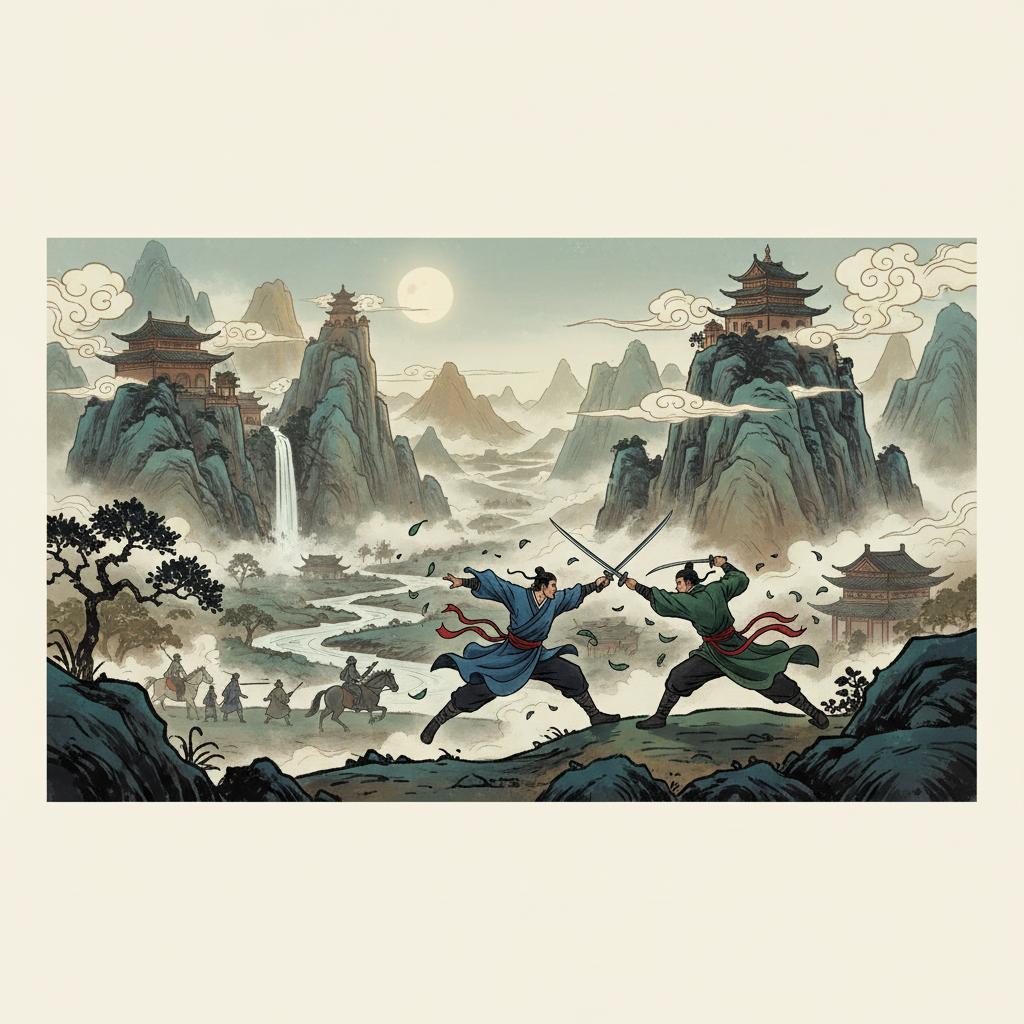
Introduction to Wuxia: Chinese Martial Arts Fiction’s Enduring Legacy
Wuxia (武侠), often translated as “martial heroes,” is a vibrant and deeply influential genre of Chinese fiction that revolves around martial arts, chivalry, and adventure. Originating from ancient Chinese literature, wuxia fiction has blossomed into a distinct and celebrated cultural form, incorporating elements of philosophy, mythology, and history. Central to this genre is the portrayal of warriors navigating complex moral landscapes and a fantastical world of martial excellence.
This genre has proliferated beyond literature into films, television dramas, and video games, captivating both Chinese-speaking audiences and global fans. The enduring appeal of wuxia lies in its blend of exhilarating action sequences, philosophical exploration, and vividly imagined social milieus such as the iconic jianghu.
Historical Origins of Wuxia Fiction and Its Evolution
The roots of wuxia fiction can be traced back to early Chinese narratives like the “Water Margin” (水浒传) and “Romance of the Three Kingdoms” (三国演义), which featured heroic warriors and tales of loyalty, justice, and rebellion. However, wuxia as a formal literary genre began to take shape during the Ming (1368–1644) and Qing (1644–1912) dynasties, with the emergence of “wuxia xiaoshuo” (martial arts novels).
In the early 20th century, writers like Jin Yong (金庸) and Liang Yusheng (梁羽生) revolutionized the genre, blending historical settings with rich storytelling and complex character development. Jin Yong’s works such as The Legend of the Condor Heroes introduced layered narratives that also grappled with moral ambiguity and societal values. This period firmly established wuxia as a cornerstone of Chinese popular culture.
Understanding Jianghu: The Martial World Beyond Society
A distinctive feature of wuxia fiction is the concept of jianghu (江湖), often translated as “rivers and lakes.” Jianghu is not merely a physical place but a parallel social realm where martial artists, wandering heroes, gangs, sects, and outlaws interact under their own codes of honor and justice.
This “martial world” operates outside mainstream bureaucratic control, governed instead by traditions like personal loyalty, chivalry, and a complex hierarchy of martial sects. Jianghu dramatizes themes of freedom and exile, camaraderie and betrayal, making it a fertile narrative landscape for wuxia stories and an enduring cultural metaphor for alternative communities beyond the state.
Cultural Significance and Philosophical Foundations
Wuxia fiction is deeply rooted in Chinese philosophical traditions, especially Confucianism, Taoism, and Buddhism. These philosophies inform the genre’s exploration of justice, morality, self-cultivation, and the nature of power.
For instance, many wuxia protagonists follow a path of xiu lian (修炼), or martial and spiritual cultivation, reflecting Taoist ideals of harmony and balance. Meanwhile, Confucian values often underscore the importance of loyalty to friends, family, and one’s martial sect. Buddhist teachings introduce themes of detachment and transcendence, enriching stories with metaphysical depth.
This philosophical synthesis makes wuxia more than mere entertainment; it serves as a mirror reflecting Chinese cultural values and ethical dilemmas, resonating with audiences across centuries.
The Rise of Kung Fu Novels in Modern Media
Kung fu novels are a subgenre of wuxia, emphasizing realistic martial arts techniques and training regimes. While classical wuxia often includes fantastical abilities like flying swords and mystical energy (qi), kung fu novels aim for more grounded depictions, popularizing detailed fight choreography and martial disciplines such as Tai Chi, Wing Chun, and Shaolin kung fu.
In contemporary film and television, adapted kung fu novels often showcase visually impressive choreography and dramatic narratives that amplify the heroic ideals found in traditional wuxia stories. Productions like Crouching Tiger, Hidden Dragon and television series based on Jin Yong’s novels have introduced wuxia motifs to an international audience, contributing to a global fascination with Chinese martial arts culture.
Interesting Details: Martial Arts Schools, Sects, and Legendary Techniques
Wuxia fiction vividly portrays martial arts sects and schools, each with unique fighting styles, philosophies, and rivalries. Historical and fictional sects like Shaolin, Wudang, and Emei are staples of wuxia literature, representing diverse approaches to martial arts mastery—ranging from the strict discipline of Shaolin monks to the internal, meditative arts of Wudang.
Legendary techniques such as the “Nine Yin Manual” or “Dragon-Slaying Saber” often symbolize the pinnacle of martial prowess in these stories, typically sought after by heroes and villains alike, driving larger conflicts. These plot devices serve as allegories for spiritual attainment and the struggle for power, enriching the narrative depth of wuxia.
Conclusion: Wuxia as a Living Tradition in Global Popular Culture
The appeal of Chinese martial arts fiction and jianghu culture transcends time and geography, continuing to thrive through modern reinterpretations in novels, films, and even video games. This genre’s complex moral universe, boundless imagination, and philosophical resonance ensure its relevance in contemporary storytelling.
For cinephiles, readers, and scholars alike, wuxia offers a unique window into Chinese cultural identity, history, and values—reminding us that beneath the spectacular martial arts feats are timeless stories about human nature, justice, and honor.
Embracing wuxia fiction invites audiences to journey into a thrilling world where martial valor meets profound philosophy, and the mysteries of the jianghu unfold in every sword stroke and whispered legend.