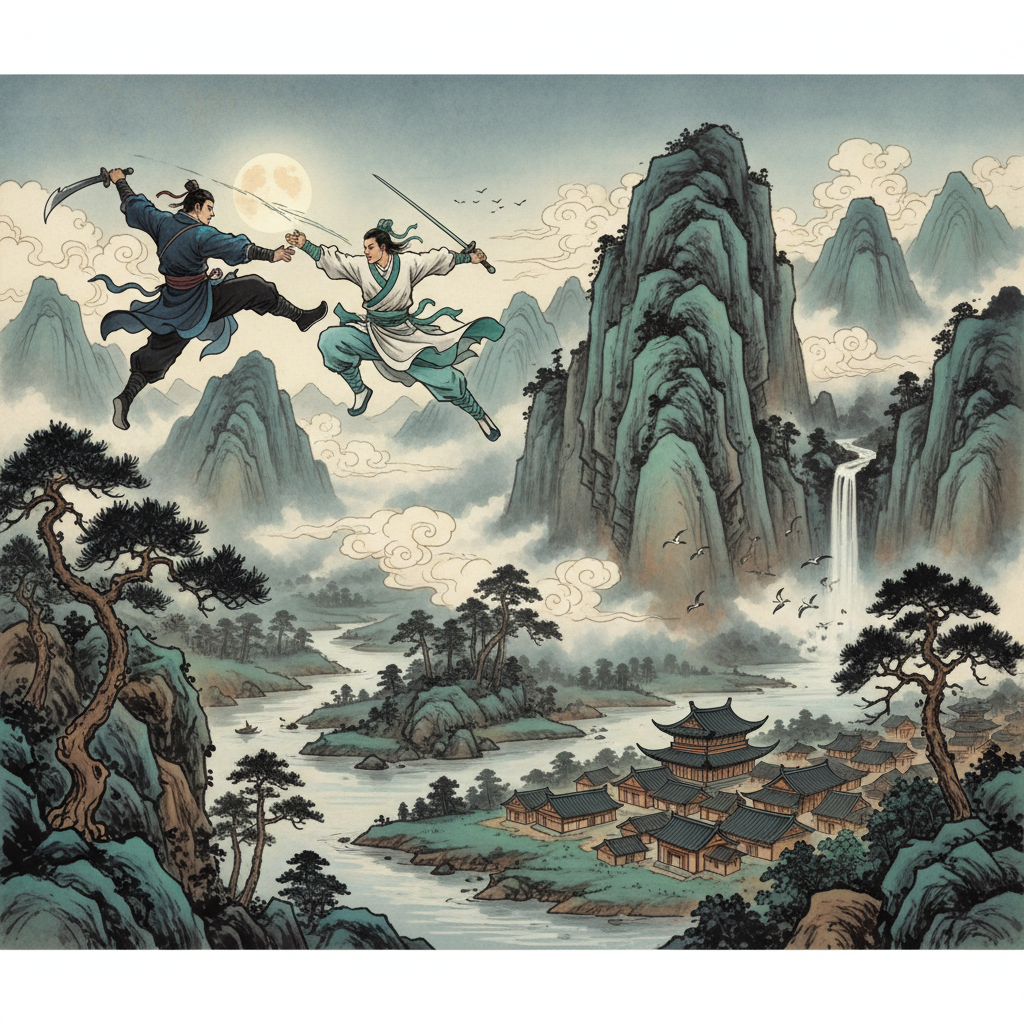
The Fascinating Landscape of Wuxia in Chinese Culture
Chinese martial arts fiction, commonly known as wuxia, immerses readers in a rich tapestry of adventure, chivalry, and mysticism. This unique genre blends historical narratives with elements of fantasy, allowing characters to perform extraordinary feats rooted in traditional martial arts. The term "wuxia," which translates to "martial heroes," embodies a spectrum of themes, including honor, loyalty, and the quest for justice. The jianghu culture, a central concept in wuxia literature, further enhances this genre’s complexity, depicting a world of wandering heroes and rogues.
Historical Context: The Origins of Wuxia Fiction
Wuxia fiction traces its origins back to ancient Chinese lore and folklore, with roots extending centuries before modern literature emerged. Early forms of the genre can be found in historical texts and poetry, such as the "Water Margin" (Shui Hu Zhuan), attributed to Shi Nai'an, written in the 14th century. This monumental work introduced characters that embodied the ideals of heroism, justice, and brotherhood, laying the groundwork for later wuxia narratives.
The genre flourished during the Ming and Qing dynasties, with the rise of pulp fiction and storytelling through oral traditions. By the time Jin Yong (Louis Cha) and Gu Long emerged as the leading voices of wuxia literature in the mid-20th century, the genre had solidified into its distinct form, replete with the stylized martial arts tactics and philosophical underpinnings that define contemporary interpretations.
Jianghu Culture: The Underbelly of Martial Arts Society
At the heart of wuxia lies the concept of "jianghu," a term that refers to the rivers and lakes symbolizing a world different from the mundane reality. Jianghu culture encapsulates the ideals, rules, and social structure of a parallel universe inhabited by martial artists, bandits, and knights-errant. This world operates independently, governed by a code of ethics more rigorous than the outside world.
In jianghu, practitioners of martial arts forge strong connections with one another, often forming sects or alliances based on honor and mutual respect. The complex dynamics of relationships, betrayals, and rivalries create a vibrant setting for stories that navigate moral ambiguities. These interactions not only highlight the intricacies of martial arts but also reflect real societal issues, such as class struggle and corruption, lending depth to the plotlines.
Cultural Significance: Values through Narrative
Wuxia stories have served as a powerful vehicle for conveying values and ethics throughout Chinese history. Loyalty, integrity, and the pursuit of justice are constantly portrayed through the actions and dilemmas faced by protagonists. Characters often embark on quests, confronting personal and societal challenges that resonate with contemporary readers.
Moreover, wuxia has played a role in the formation of Chinese national identity, especially during colonial and modern times. As the genre matured, it gave voice to the cultural resistance and aspirations of its people, providing hope and inspiration amidst social turmoil.
The Influence of Martial Arts on Wuxia Narratives
Martial arts are not merely a backdrop in wuxia; they are integral to character development and thematic exploration. The training, discipline, and philosophies involved in martial arts practice serve as allegories for self-improvement and growth. Techniques like "qinggong" (lightness skill) and "neijia" (internal martial arts) symbolize deeper principles such as mindfulness and inner strength.
Classical kung fu styles, including Shaolin and Wu Dang, are often showcased, with characters displaying incredible agility and unique combat styles. These representations not only celebrate the physical aspects of martial arts but also delve into their philosophical underpinnings, enriching the narrative with layers of meaning.
The Modern Evolution of Wuxia: A Global Phenomenon
In the contemporary era, wuxia has transcended Chinese borders, gaining international acclaim through film adaptations, web novels, and graphic novels. The captivating visuals and thrilling narratives have garnered a global audience, creating subcultures of dedicated fans. Renowned films such as "Crouching Tiger, Hidden Dragon" and "Hero" have introduced non-Chinese audiences to the allure of martial arts stories and their intricate lore.
The evolution of digital platforms has further democratized the genre, allowing new authors to enter the field and popularize diverse styles and interpretations of traditional narratives. Online communities celebrate these creators, fostering discussions and collaborations that continue to breathe life into the wuxia legacy.
Conclusion: Wuxia as a Living Tradition
Wuxia fiction remains a vital part of Chinese culture, reflecting societal values and historical context while enchanting readers with tales of heroism and adventure. The interplay between jianghu culture and the martial arts not only provides thrilling stories but also encourages introspection and moral discourse. As this genre evolves, it continues to inspire new generations, ensuring that the essence of the martial hero endures for years to come. The enthralling world of wuxia is not merely a reflection of the past but a vibrant narrative that resonates in today's interconnected society.