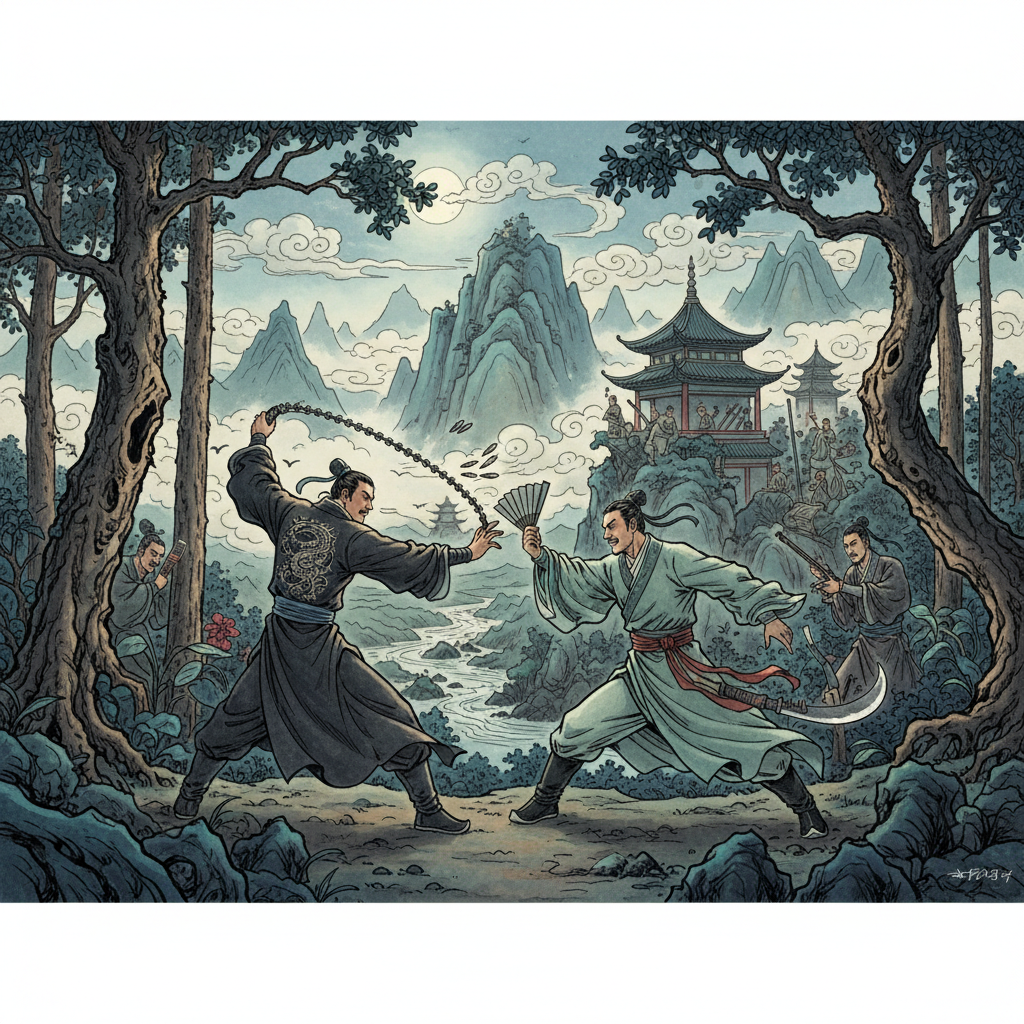
The Allure of Wuxia and Jianghu Culture
Wuxia, a genre that captures the imagination through its rich tapestry of martial arts and Heroic legends, has become an integral part of Chinese cultural identity. Translated as "martial heroes," Wuxia literature often unfolds within the realm of "jianghu" — a metaphorical world that represents the collective experiences of martial artists, or "xia." Within this unique universe, themes of honor, vengeance, and moral dilemmas intertwine, enthralling readers and creating a cultural narrative steeped in tradition.
Historically, Wuxia fiction dates back to the Tang Dynasty while gaining prominence during the Ming and Qing Dynasties through oral storytelling and later through literature. The advent of the printing press allowed for widespread dissemination of these tales, enabling the genre to evolve. The crafters of this art form illustrated not just martial prowess, but a philosophical approach to life, drawing from Confucian, Daoist, and Buddhist teachings. As a result, Wuxia has shaped how martial arts narratives are perceived both in China and globally.
The Role of Hidden Weapons in Wuxia Fiction
One of the most fascinating aspects of Wuxia is the concept of "hidden weapons" (暗器, ànqì), which adds layers of intrigue, strategy, and drama in these tales. Unlike conventional armaments, hidden weapons are designed to be discreet, often concealed within the garments of martial artists and utilized at opportune moments. This element not only emphasizes the cunning nature of characters, but also heralds the importance of intelligence and creativity in combat.
In Wuxia novels, hidden weapons range from throwing darts and concealed shurikens to more elaborate contraptions like poisoned needles and fan-like blades. The ability to wield these weapons becomes a metaphor for the character's inner strength and resourcefulness. Famous Wuxia authors, such as Jin Yong and Gu Long, often feature characters who master these techniques, showcasing a duel between technique and philosophy.
Cultural Significance: Jianghu and the Hero’s Code
Jianghu is more than a mere setting; it embodies a lifestyle governed by strict codes of conduct and a complex web of relationships. The inhabitants of this world, referred to as "jianghu individuals," often undergo trials that test their moral values and sense of loyalty. The hidden weapons in their arsenal symbolize both their resolve to fight injustice and the underlying paradox of their existence.
The heroes of Wuxia are frequently torn between personal ambition and their obligations to society. This struggle resonates deeply with readers, presenting a framework where characters must navigate their quests for vengeance or redemption while honoring the unwritten laws of the Jianghu. It serves as a mirror reflecting society’s values and the human condition, elevating Wuxia works to an artistic level that transcends mere entertainment.
Iconic Kung Fu Novels: A Legacy of Hidden Techniques
Many renowned Kung Fu novels underscore the artistry associated with hidden weapons and their martial techniques. Jin Yong's "The Legend of the Condor Heroes" introduces characters equipped with extraordinary skills in martial arts and hidden weapons, emphasizing the theme of heroism intertwined with tragedy.
Similarly, Gu Long's "The Eleventh Son" champions the subtle use of hidden weapons, showcasing how attention to detail can alter the course of a martial conflict. These authors intricately weave stories drenched in rich character development, complex plots, and philosophical inquiries, making their works timeless classics that continue to influence modern interpretations of Chinese martial culture.
The Modern Renaissance: Wuxia in Global Popular Culture
In today’s digital age, Wuxia has transcended its traditional boundaries, captivating global audiences through films, television dramas, and video games. Works like the Netflix adaptation of "Crouching Tiger, Hidden Dragon" and video games such as "Ghost of Tsushima" have unleashed renewed interest in the genre.
The hidden weapons of Wuxia are often portrayed through dynamically choreographed fight scenes that enthrall viewers while maintaining the delicate balance between aesthetic beauty and lethal precision. Such portrayals not only introduce Western audiences to the rich historical context of Wuxia but also reaffirm the eternal allure of its philosophies.
Conclusion: The Enduring Mystique of Wuxia's Hidden Weapons
In conclusion, the hidden weapons in Wuxia fiction serve as a crucial narrative device, deeply intertwined with Jianghu culture and philosophical musings. As we delve into the realm of martial arts literature, we uncover not just thrilling tales of combat but profound reflections on morality, loyalty, and human spirit. The genre continues to inspire generations, reminding us of the intricate dance between strength and wisdom, leading us to explore the depths of our own humanity within the sublime realm of Wuxia.