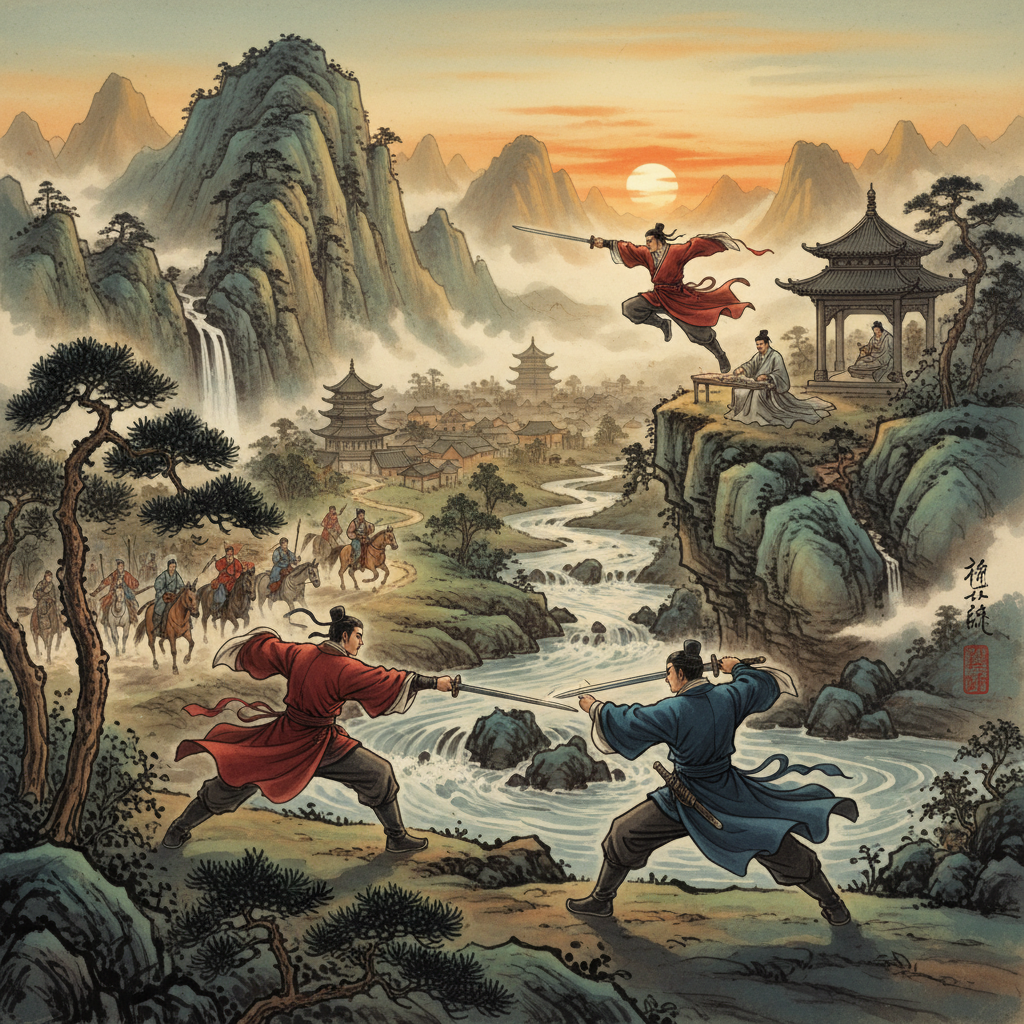
The Allure of Wuxia: A Brief Overview
Wuxia, a genre that combines martial arts and fantasy, has enchanted readers for centuries with tales of chivalrous heroes, formidable villains, and intricate plots woven within the rich tapestry of Chinese culture. Originating in ancient China during the early dynasties, wuxia literature depicts the life of wanderers, known as "jianghu," who inhabit a world rife with adventurers, swordsmen, and honor codes. The notably fluid depiction of martial arts techniques and philosophies distinguishes this literary form, making it a unique artifact of Chinese culture.
Historical Context: The Roots of Jianghu Culture
The origins of jianghu can be traced back to the Tang Dynasty (618–907 AD), a period characterized by significant cultural and intellectual advancement. During these times, various folklore tales began to emerge, revealing themes of martial heroism and moral dilemmas that could resonate with the social ethos of the time.
As Chinese society evolved, so did the narratives surrounding these characters. By the Qing Dynasty (1644–1912), the genre thrived, thanks particularly to authors like Jin Yong (Louis Cha) and Wang Dulu, who meticulously crafted stories that intertwined personal valor with societal issues. These authors presented the jianghu as not just a physical realm but a metaphor for life's trials, the moral struggles faced by individuals, and the pursuit of justice.
Key Themes and Motifs in Wuxia Novels
Wuxia novels are filled with rich themes that explore concepts of loyalty, honor, vengeance, and redemption. Traditional values rooted in Confucian philosophy — respect for authority, filial piety, and moral integrity — are prevalent throughout the narratives. Yet, they also venture into the realms of Daoism and Buddhism, depicting the tension between internal and external forces governing human behavior.
Interestingly, the martial arts skills showcased are not only a means of conflict resolution but also represent personal growth and enlightenment. The protagonists often undergo grueling training regimes, embodying the concept that one must endure hardship and suffer to achieve mastery. Notable techniques, such as "inner strength" cultivation, serve as metaphors for self-discipline and introspection — a crucial aspect that resonates deeply in Chinese spiritual traditions.
The Impact of Wuxia on Modern Chinese Cinema and Literature
The popularity of wuxia fiction has transcended the written word, significantly influencing Chinese cinema, television dramas, and even video games. Iconic films like "Crouching Tiger, Hidden Dragon" and "Hero" showcase the dynamic choreography of martial arts, emphasizing aesthetics that blend combat with artistry. These adaptations have played a substantial role in introducing wuxia's rich narratives to global audiences, further cementing its cultural significance.
Moreover, contemporary authors are reviving the genre by infusing it with modern sensibilities, appealing to younger demographics through themes that challenge the traditional notion of heroism and morality. The interplay between historical myth and modern storytelling continues to evolve, ensuring that wuxia remains a dynamic component of Chinese literature and culture.
The Craft of Martial Arts: Symbolism and Philosophy
One of the enduring aspects of wuxia narratives is the intricate portrayal of martial arts not merely as physical skills but as philosophical experiences. The practice of kung fu, steeped in tradition and spirituality, emphasizes harmony between body, mind, and environment. Protagonists often face moral choices that reflect deeper philosophical questions, inviting readers to ponder concepts of justice, sacrifice, and personal responsibility.
In this light, martial arts serve as an empowering vehicle for self-discovery, with characters often seeking enlightenment through their interactions and conflicts within the jianghu. The tenets of various martial arts schools symbolize different paths to wisdom: the agile and deceptive moves of the Crouching Tiger School contrast with the fierce and direct approach of the Iron Palm Sect, illustrating the diversity of thought within Chinese philosophy.
Conclusion: The Enduring Legacy of Wuxia
Wuxia fiction reflects the rich cultural fabric of Chinese society by intertwining tales of heroism, morality, and martial prowess. As readers continue to engage with these narratives, they also partake in a timeless dialogue about human nature and the complexities of life. The essence of jianghu—far more than just a backdrop for martial arts—is a realm where characters explore the full spectrum of human experience.
As the genre maintains its relevance in contemporary literature and media, the enduring charms of wuxia remind us of the value of courage, honor, and the continual pursuit of self-improvement against the odds of fate. Its legacy as a cultural artifact serves not only to entertain but also to inspire critical reflection on the moral landscape of our own lives.