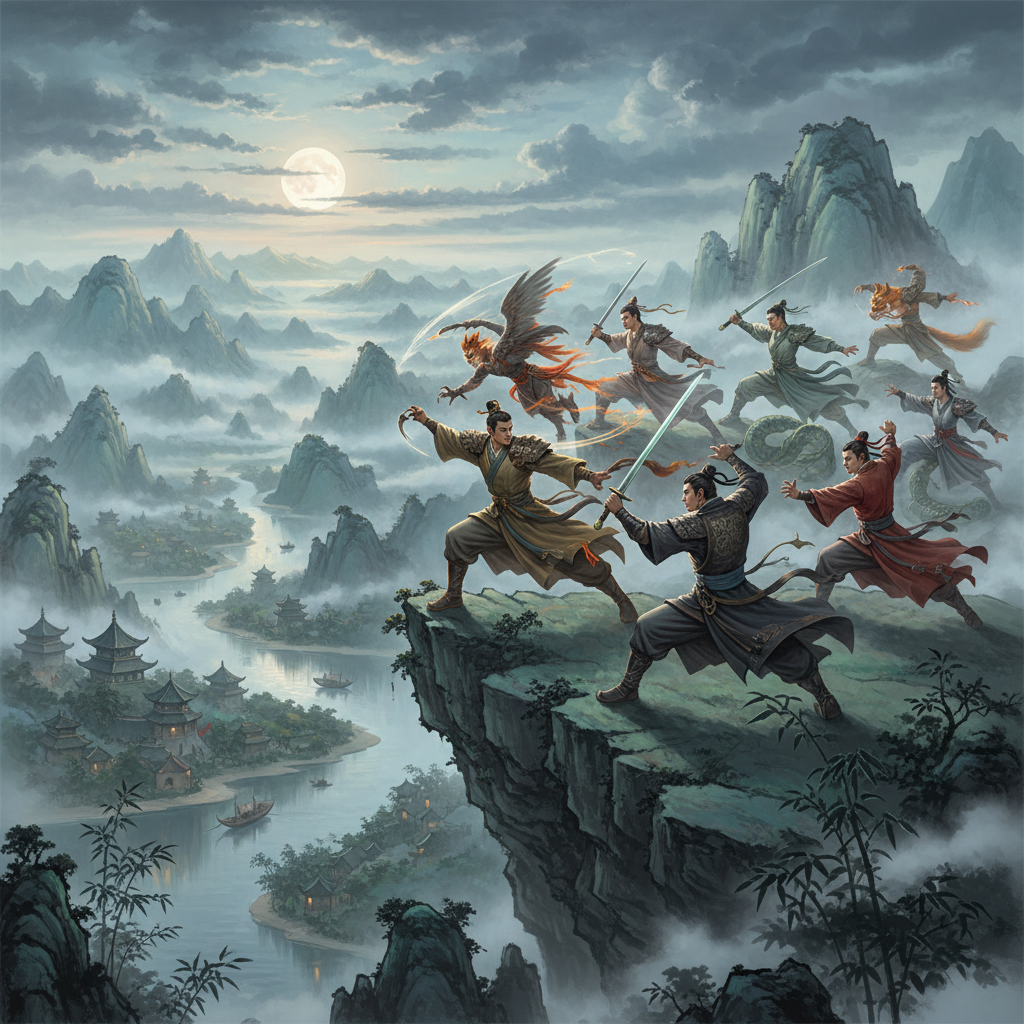
Introduction to Wuxia and Jianghu
Wuxia, a genre of Chinese fiction focused on martial arts, presents an enthralling tapestry of adventure, heroism, and existential philosophy. At its heart lies the concept of jianghu, a realm where the morally ambiguous coexist and adventure unfolds. Here, the boundaries of reality blur, and especially intriguing are tales that involve shapeshifters—characters with the power to transform their forms, pushing the boundaries of human capability and altering the dynamics of conflict.
Historical Context of Wuxia Fiction
The origins of wuxia can be traced back to ancient Chinese folklore and oral traditions, evolving over centuries into a thriving literary genre. During the Tang (618–907 AD) and Song (960–1279 AD) dynasties, stories of legendary heroes and martial arts began to formalize into narratives. These tales were influenced by historical events, including the upheavals during the dynastic transitions, symbolizing the struggle for righteousness amidst corruption.
During the late Qing dynasty, the genre saw a renaissance through the publication of serialized novels. Prominent authors like Jin Yong (Louis Cha) and Gu Long distilled the essence of jianghu, weaving complex plots that featured not only martial prowess but also supernatural elements. This synthesis created a fertile ground for shapeshifters, often representing the duality of human nature and echoing larger philosophical themes within Daoism and Buddhism.
Cultural Significance of Shapeshifters in Wuxia
In the realm of Chinese folklore, shapeshifters often embody dual identities—common motifs include foxes and other animals that can assume human form. These beings symbolize the fluidity between good and evil, reflecting cultural beliefs about the complexity of morality. In wuxia fiction, shapeshifting characters serve as both allies and adversaries, challenging protagonists by testing their moral compasses and fighting skills. Such narratives not only entertain but also provoke contemplation on identity, ethics, and the nature of change.
Wuxia’s interplay with the idea of shapeshifting also resonates with concepts from Daoist philosophy, which emphasizes harmony with the cosmos and the transient nature of life. Characters who can shift forms often transcend traditional boundaries, illustrating the belief in personal transformation and enlightenment through martial arts mastery.
Notable Shapeshifters in Kung Fu Novels
Within the vast ocean of kung fu novels, several notable shapeshifter characters have captured the imaginations of readers:
-
Demon Girl from "Heavenly Sword and Dragon Sabre": A character capable of transformation, her dual nature complicates her allegiances and motivations, showcasing how shapeshifting can embody the inner conflict between desire and duty.
-
Jin Yong’s “Nine Yin Manual”: This essential text within various novels often implies teachings on internal energy manipulation, hinting at the idea that mastery of self can lead to transformative abilities—both physically and spiritually.
-
Ghostly Figures in "The Smiling, Proud Wanderer": The presence of spectral beings and shape-shifting adversaries serves as a poetic metaphor for the fugitiveness of life and love, elevating the martial arts adventure to a philosophical exploration.
Shapeshifters and Their Symbolism in Modern Adaptations
The allure of shapeshifting in wuxia has not remained confined to traditional literature; it has permeated modern adaptations across various media including films, television dramas, and video games. The recent surge in adaptations has allowed these themes to reach wider audiences, often modernizing the narratives while retaining the rich symbolic and cultural foundations.
For instance, in cinematic representations, wuxia films such as "Crouching Tiger, Hidden Dragon" and various adaptations of Jin Yong's works emphasize visual storytelling to showcase the fluidity of martial arts movements, parallel to the fluidity of identity. Shapeshifting metaphors in these works often underline themes of personal growth and the search for one’s place within the chaotic landscape of jianghu.
Conclusion: The Timeless Appeal of Shapeshifters in Wuxia
The world of wuxia and jianghu is one that thrives on the rich interplay of characters, philosophies, and martial arts mastery. Shapeshifters within this genre add layers of complexity to narratives, serving as mirrors to the human psyche and embodiments of the eternal struggle between light and dark. Their stories—the evolution of identity and morality—continue to resonate strongly today, keeping the spirit of a rich cultural heritage alive while inviting new generations to engage with its timeless allure. Whether in literature or through visual media, the enchanting realm of shapeshifting in wuxia remains an indelible part of Chinese cultural identity and storytelling.